What Is Going On
A lot of houses around Niceville went up between 1973 and 2013
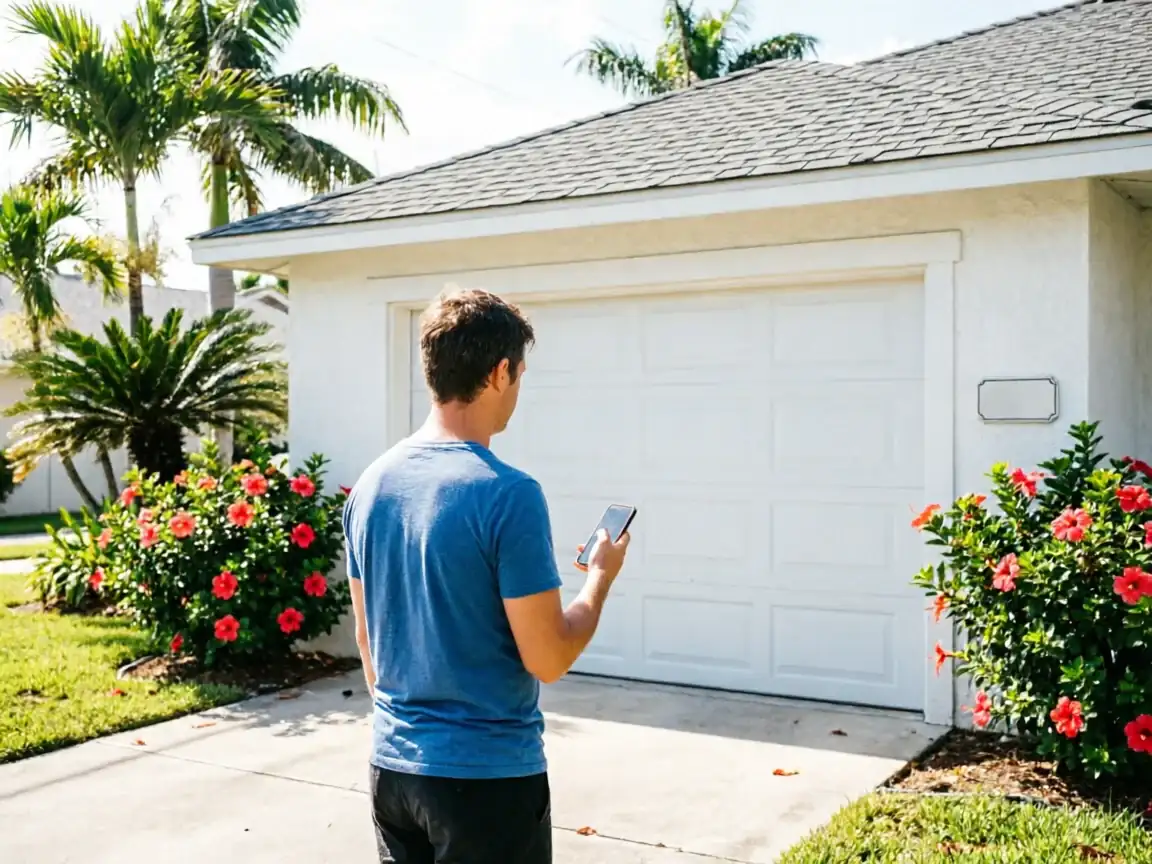
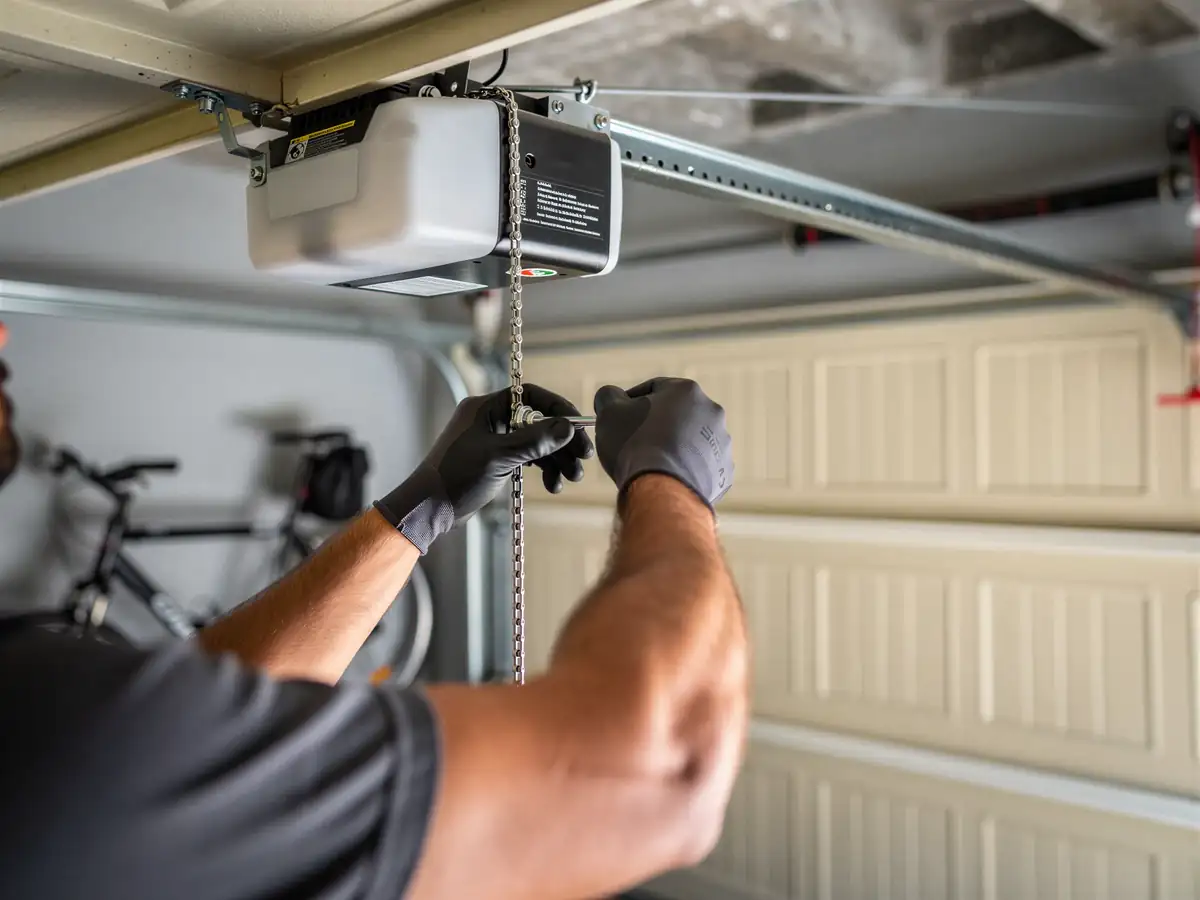
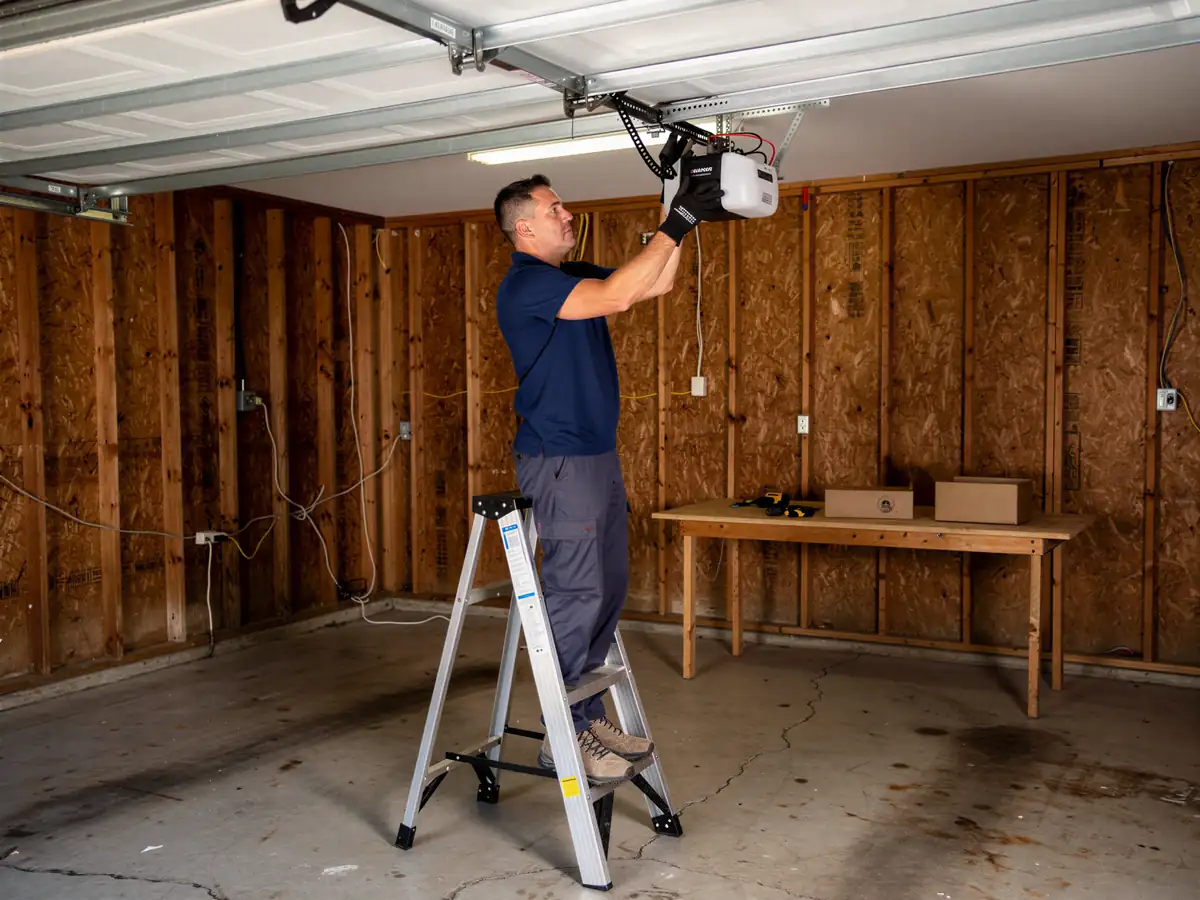
With the median build year sitting around 1979, and most of the stock across the area's seven named neighborhoods dates to the 1960s and 70s. That matters here because an opener installed when the house was built, or even a replacement unit from twenty years back, almost never has a battery backup. When the power cuts, the opener just stops. No chain drive moving, no light, nothing on the wall pad.
The door itself isn't broken in that moment
It's the opener that's dead in the water, and the door is sitting wherever it was when the lights went out, usually down and locked to the track by the motor unit. People call us thinking the springs failed or a cable snapped, and nine times out of ten it's just that the opener has no power and no way to store any.
Newer openers, the ones built in the last several years
Usually include a battery backup as standard. If your house is on the older end of that 1973-2013 range, there's a decent chance yours doesn't have one. That's not a flaw in the unit, it's just what was normal when it was installed.
Checking It Yourself
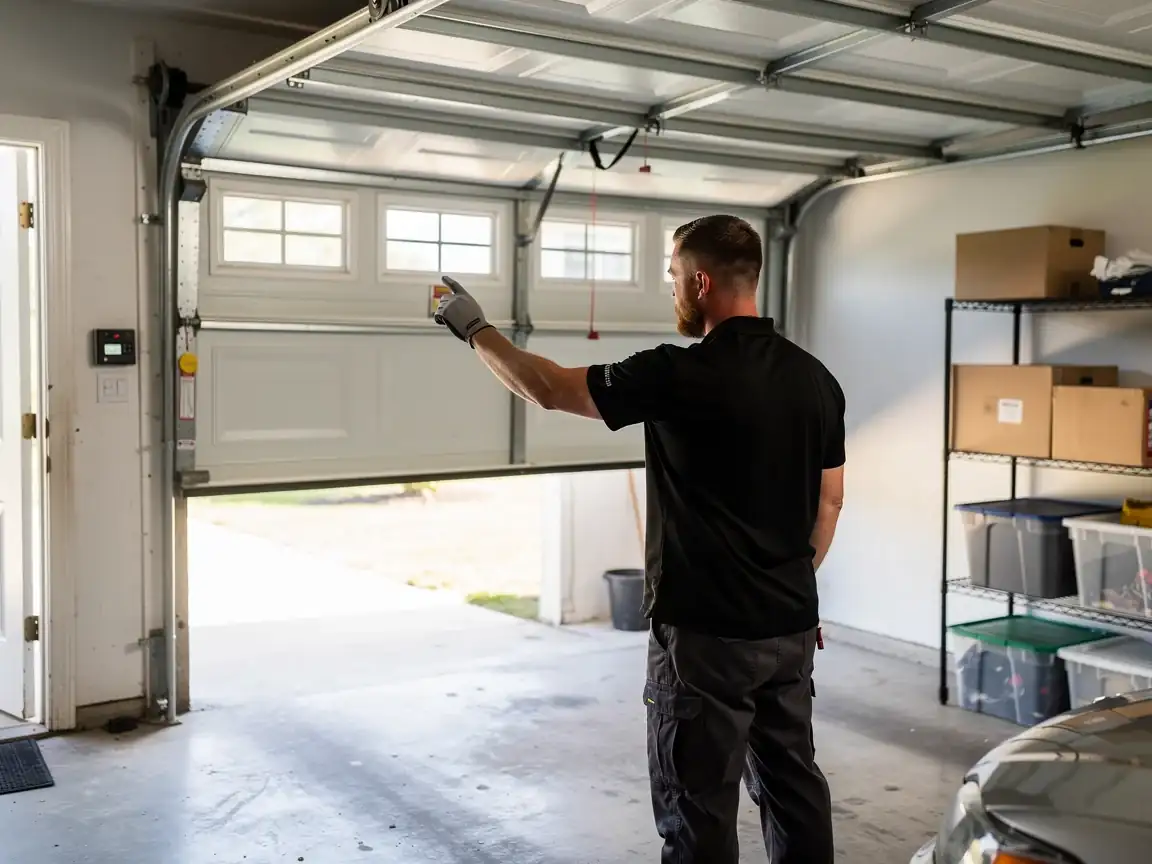
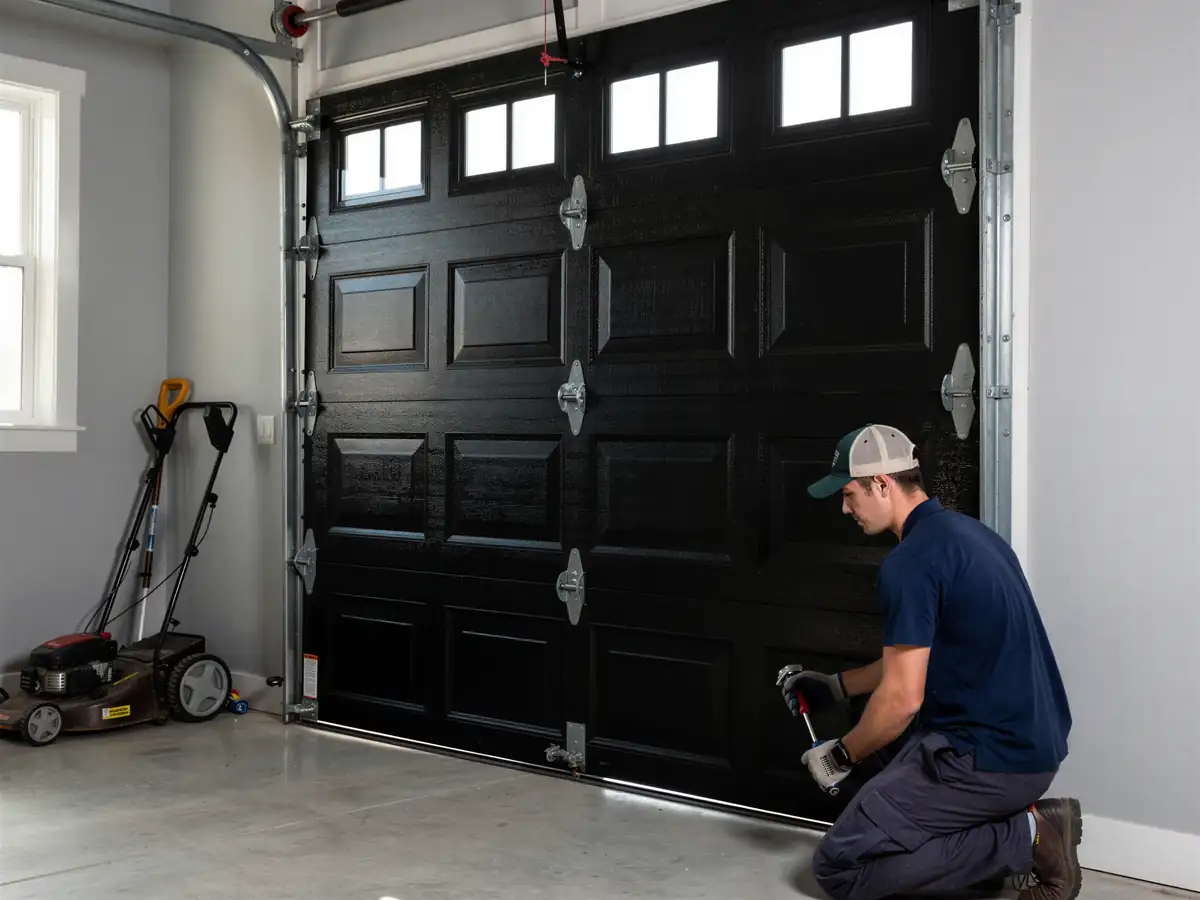
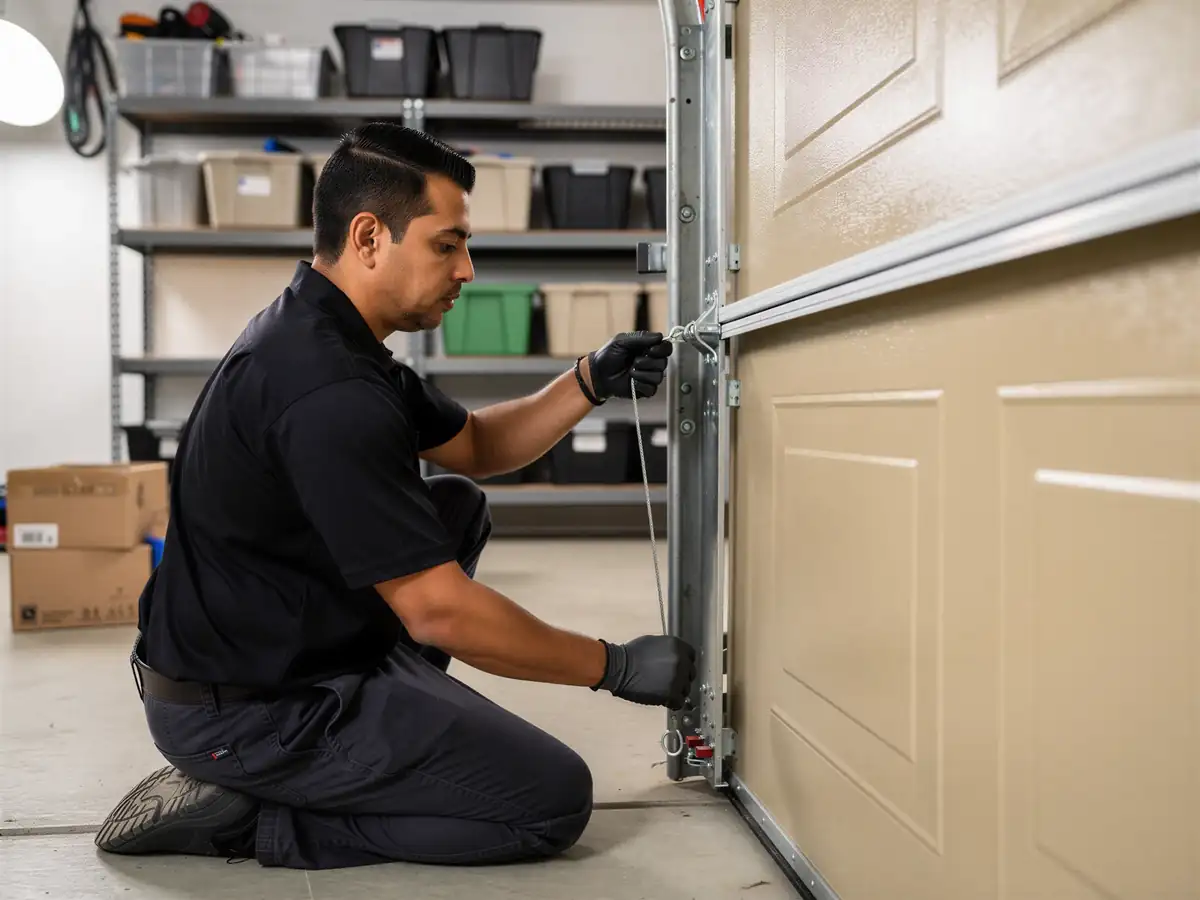
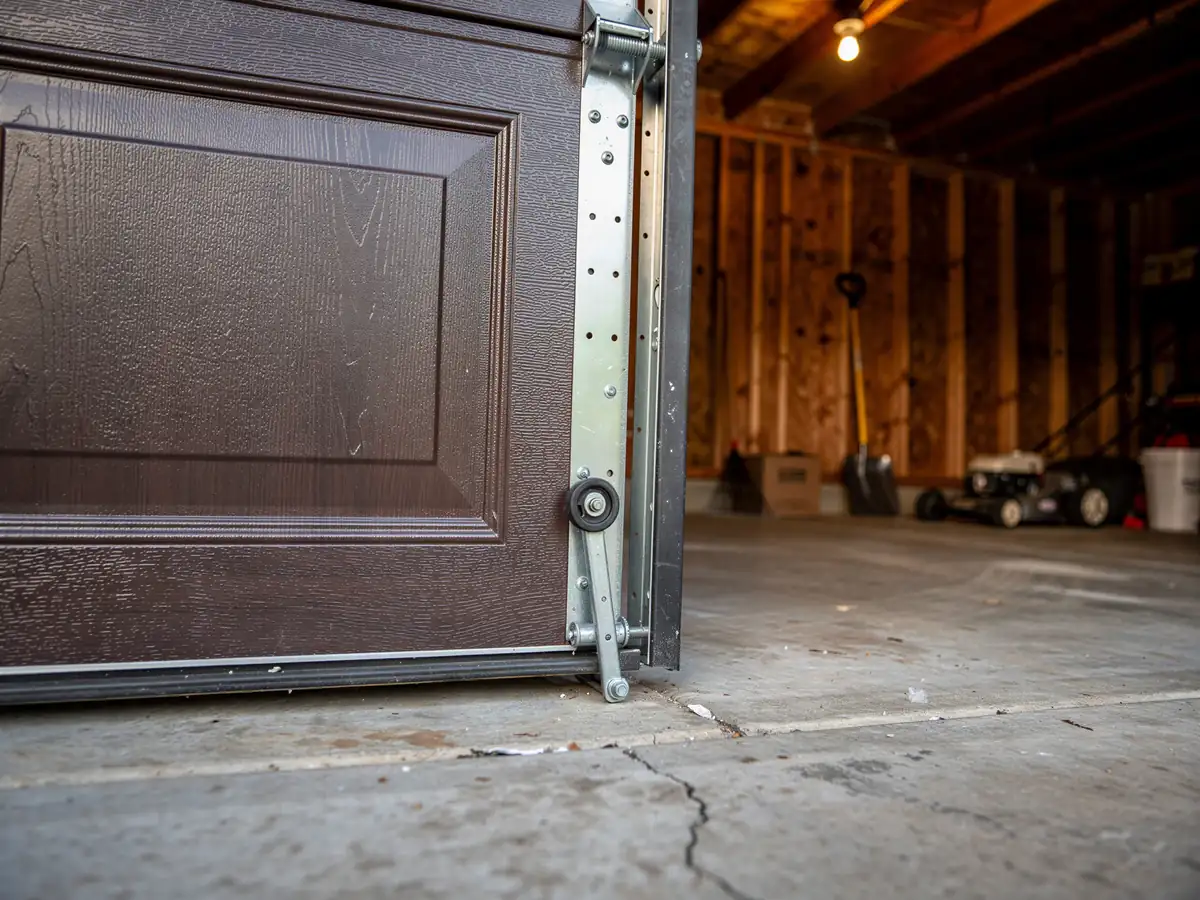
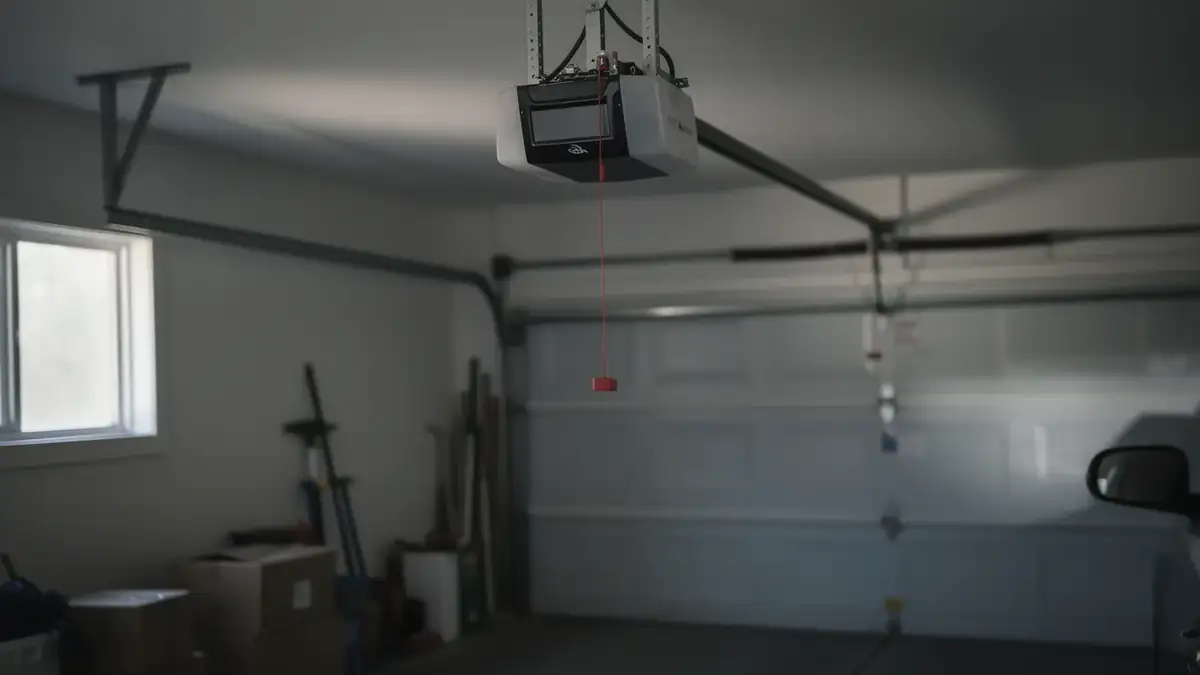
Before you call anyone, find the manual release cord, the red handle hanging from a cord near the top of the door. Pull it straight down and the door disengages from the opener carriage, letting you lift it by hand. On a door in good working order with springs that are properly tensioned, it should lift with one hand and stay roughly where you put it.
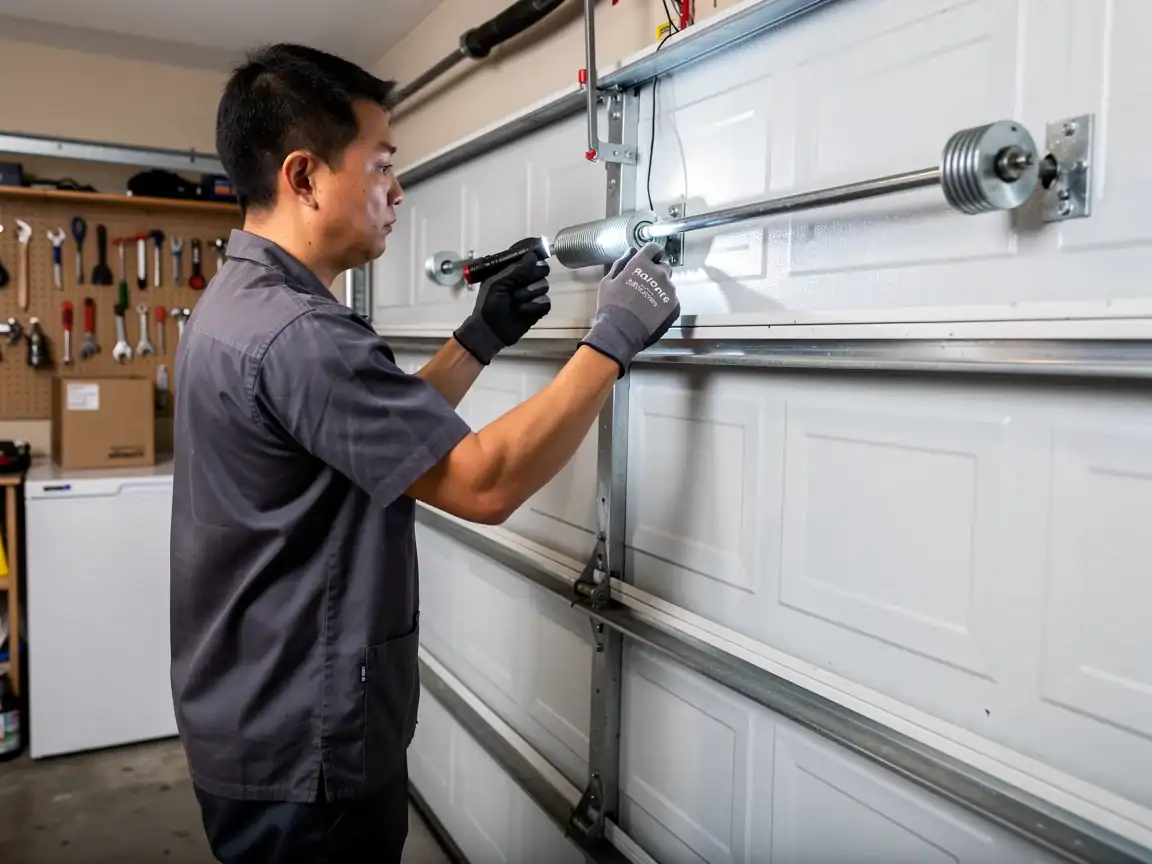
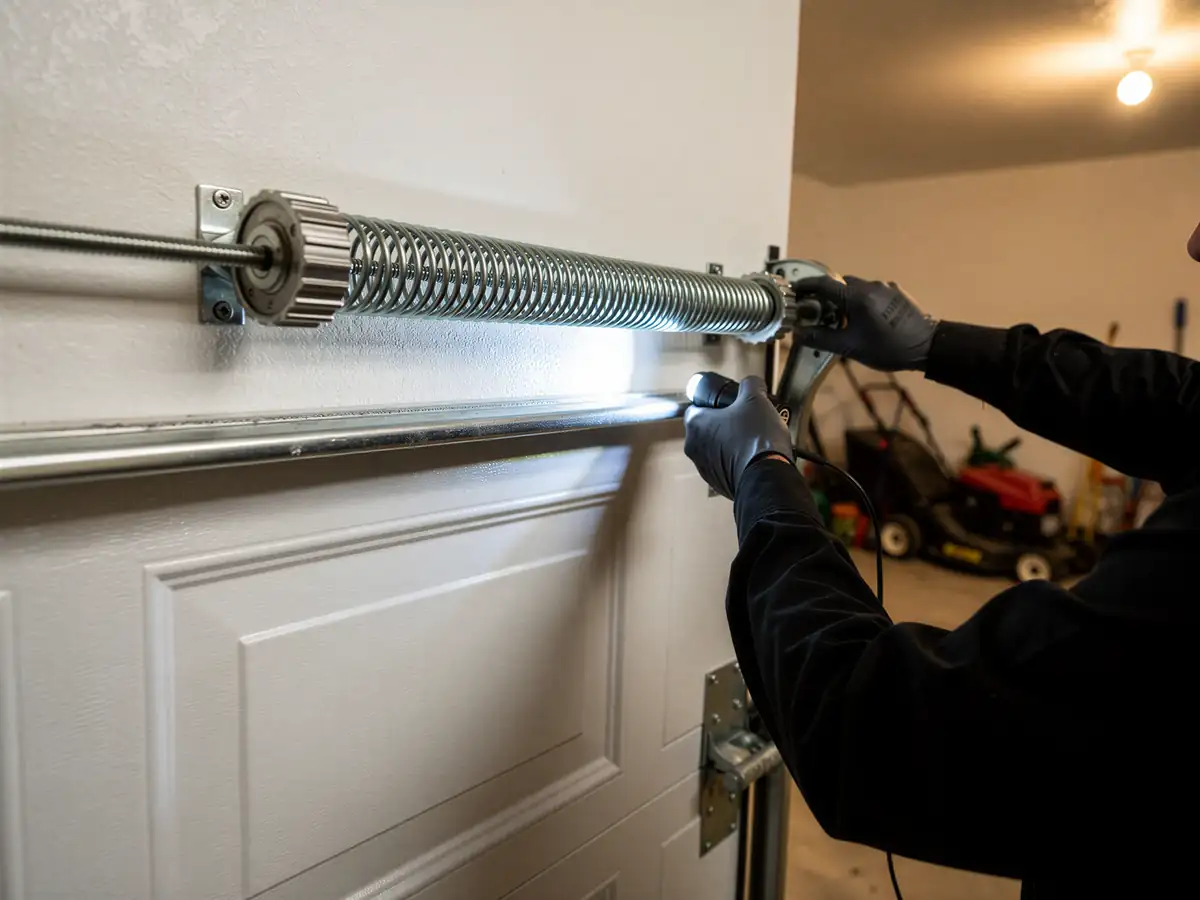
If it slams down or you can barely budge it, don't force it. That's a spring problem, not a power problem, and it's a separate issue from what's covered here.
Once power is back, pull the release cord toward the door to re-engage the carriage, then run the opener through a full cycle before you trust it with the car inside. On older units without backup power, a hard outage can sometimes throw off the stored position in the opener's logic, so the door may need a reset even after the lights come back on. Check your opener's wall console for a blinking light or an error code; that usually points to whether it needs a manual reset or just time to recheck itself.
How Local Conditions Play In
This area sits in a mild climate band with occasional freeze risk, not the kind of place where openers fail from cold the way they do further north. Power cuts here are more often tied to storms than to cold-weather strain on the motor. That's a different failure mode than ice-locked tracks or frozen lubricant, and it means the fix is almost always electrical, not mechanical.
Across the broader service area, from Valparaiso four miles out to five miles southeast and on toward Shalimar and Lake Lorraine, the housing is similar enough in age that the same opener situation shows up again and again: original or early-replacement units with no backup power, installed decades before battery backup became a standard feature.
With median household income in the area at $81,938 across roughly 8,743 owner-occupied houses, a battery backup upgrade is a reasonable add for most households here, not a luxury item, especially for anyone who can't afford to be stuck outside with the car trapped behind a dead opener during a storm.
The Seasonal Bit
Storm season is when this comes up most
A line goes down, the power's out for a few hours, and the garage door sits exactly where it was when the opener lost juice. If that happened to be mid-cycle, the door can be left half-open, which isn't a security problem so much as a nuisance until power is restored.
We don't sell or push a specific battery backup brand here
And we won't pretend every opener needs one. If your garage is attached to a house you're rarely parking a car in during outages, or you're comfortable using the manual release every time, you may not need the upgrade at all. That's a judgment call based on how you actually use the garage, not a universal fix.
What we will say: if your opener predates roughly the last decade
There's a good chance it has no backup power built in, and that's worth knowing before the next outage rather than during it.