What Is Going On
Most of the houses we work on in Niceville went up between 1973 and 2013
With the median build year sitting around 1979. That one number explains a lot of what a service call looks like here. A house from that era usually has a torsion spring system, a steel sectional door, and an opener that's probably been swapped out once or twice since the original. Across the older pockets of town - seven named areas that are mostly 1960s and 70s stock - you'll still find extension-spring setups and lighter-gauge tracks that predate the torsion standard most newer doors use.
A service call isn't one thing
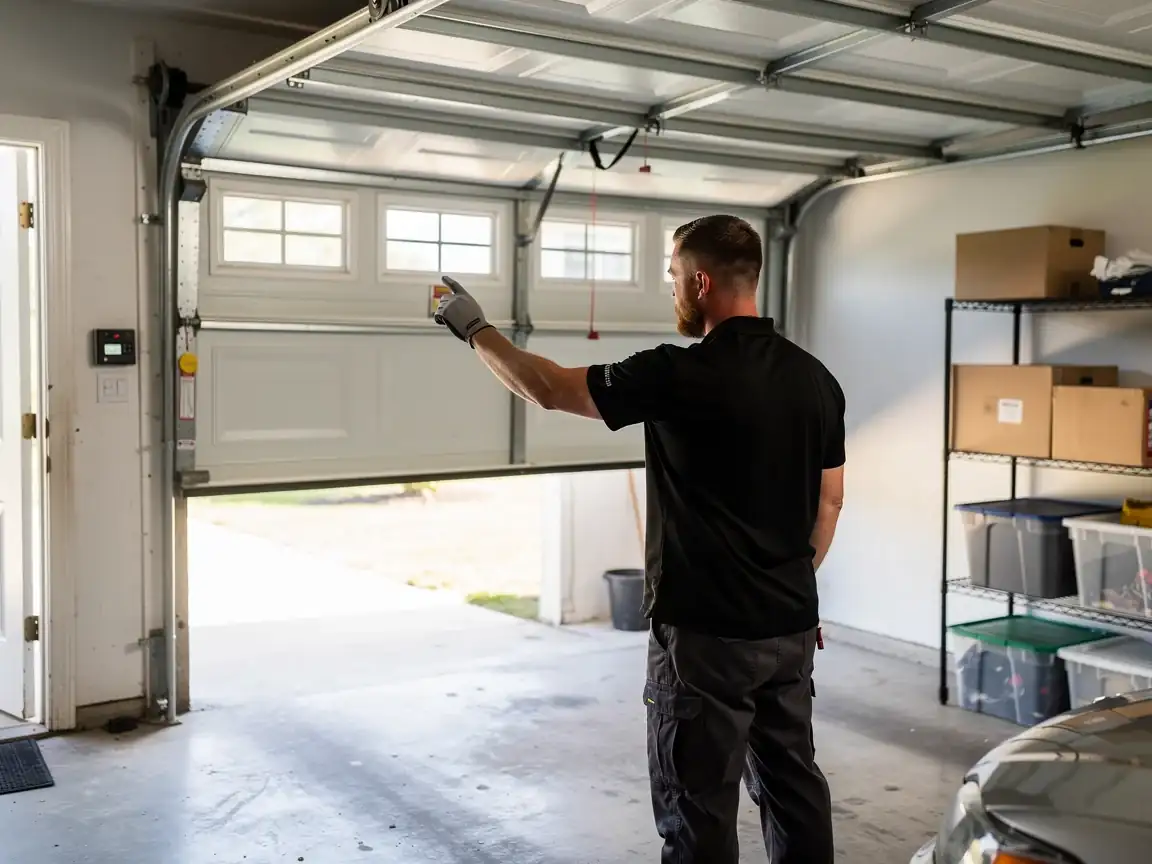
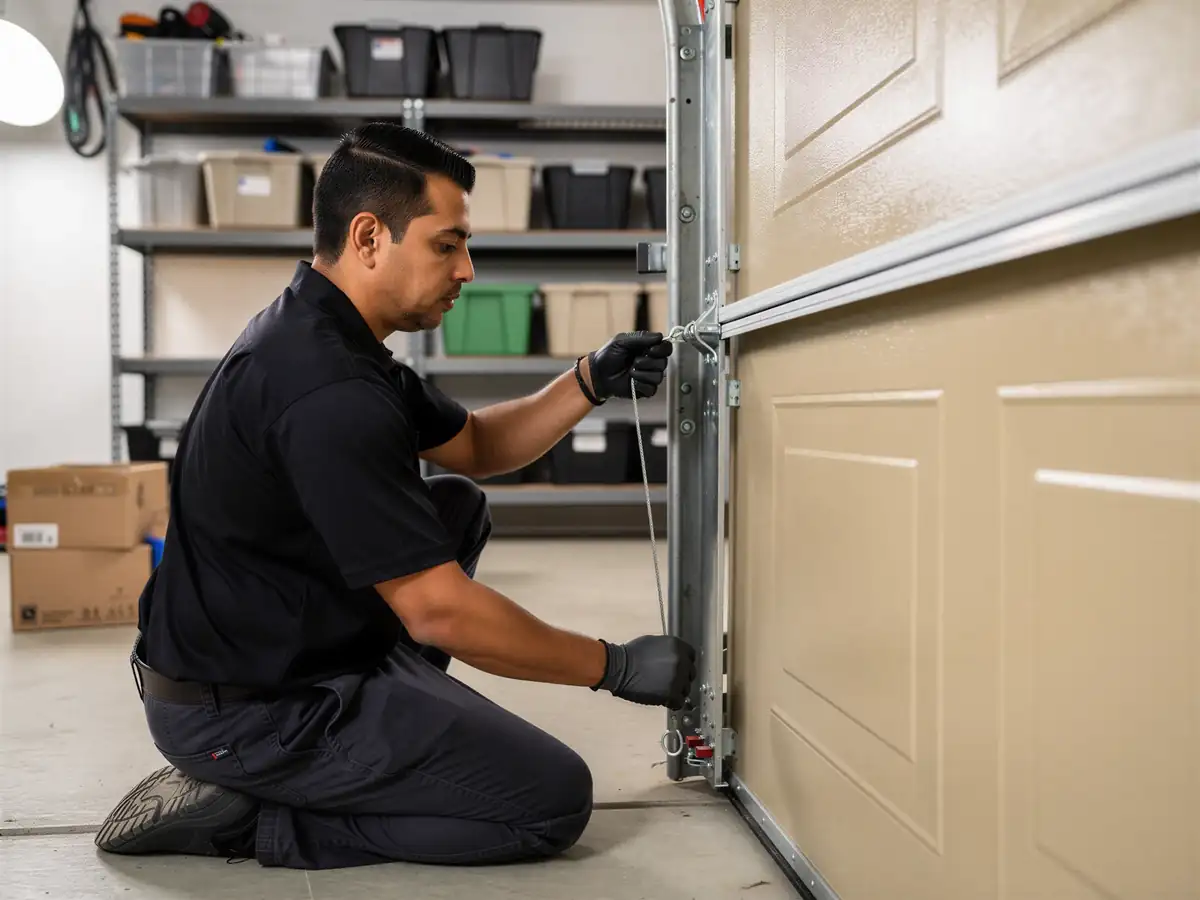
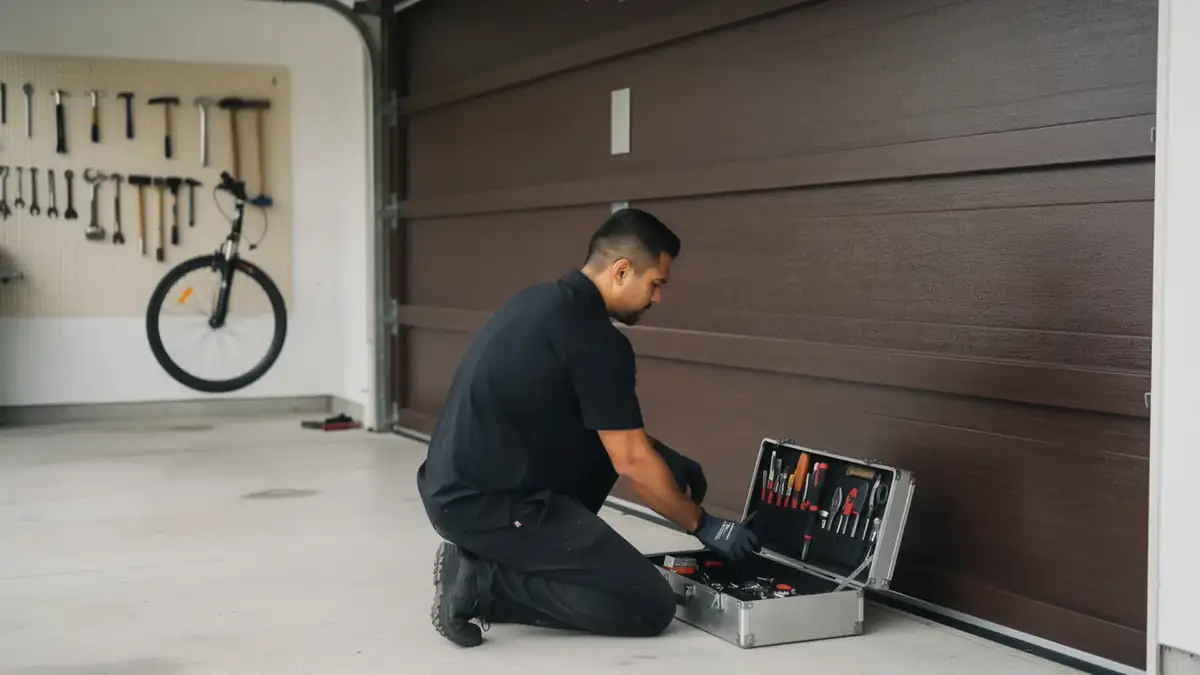
It's whatever brought us out - a door that won't close, a spring that let go, an opener that grinds instead of lifts - but the diagnostic routine is the same first ten minutes regardless of the complaint: check the springs for wind and wear, check the cables and drums, check the track alignment, check the opener's force and limit settings. With roughly 8,743 owner-occupied houses across the area we cover, we see the same handful of age-related failures over and over, which is why we can usually name the problem before we lift the door.
- 8,743 owner-occupied
Checking It Yourself
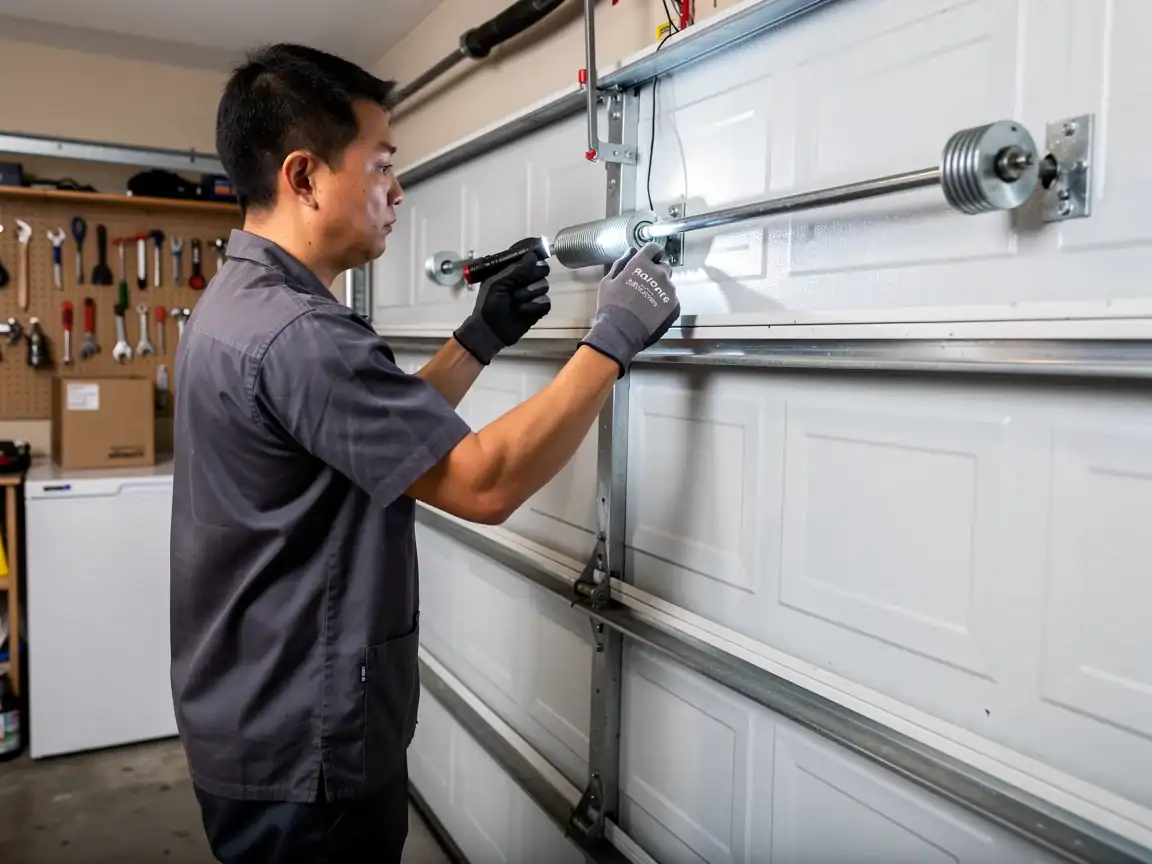
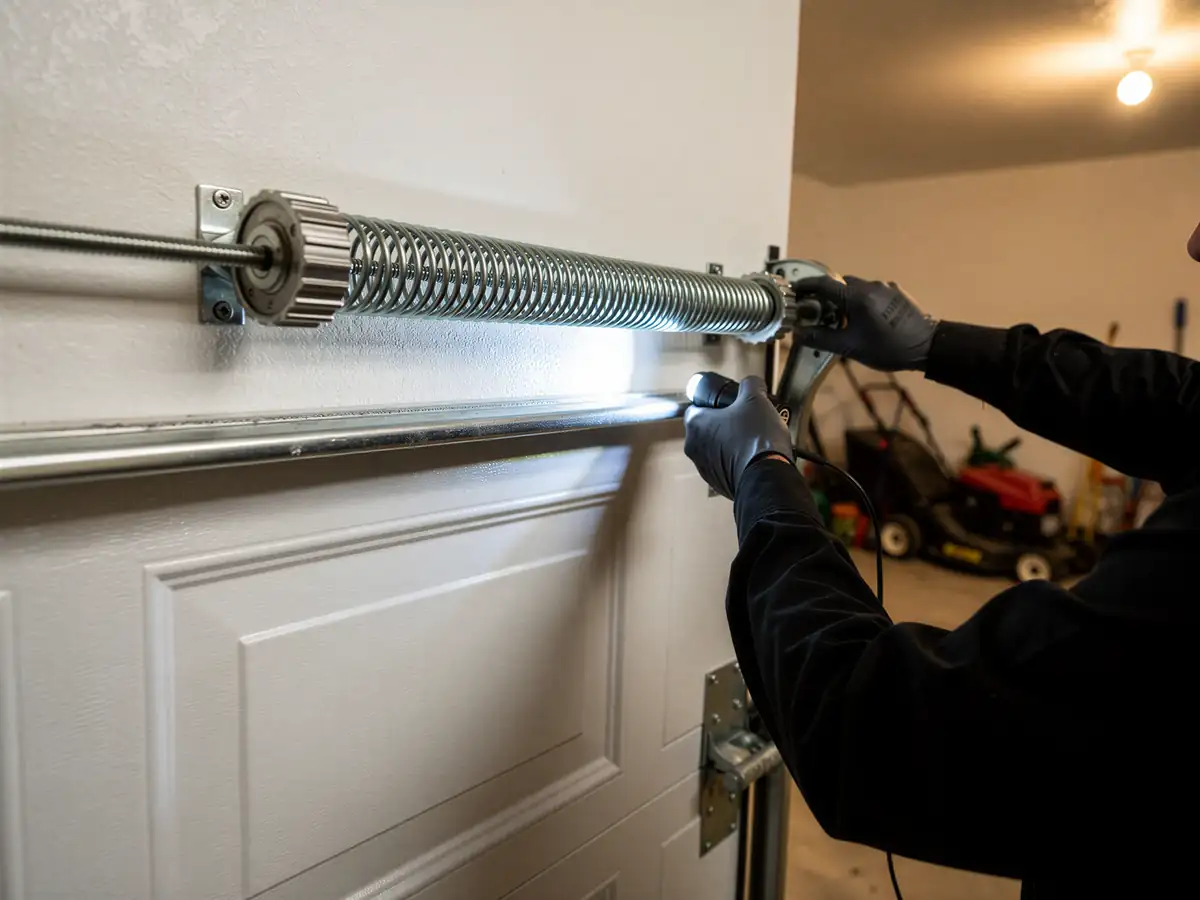
Before you call, there are a few things worth looking at, especially if your house falls into that 1960s-70s bracket. Pull the emergency release and try moving the door by hand - if it's heavy or uneven, that's a spring losing tension, not an opener problem. Look at the springs themselves: a gap in the coil means it's broken, and that's not a DIY fix, period. Torsion springs are under enough load to hurt you badly if you don't know what you're doing.
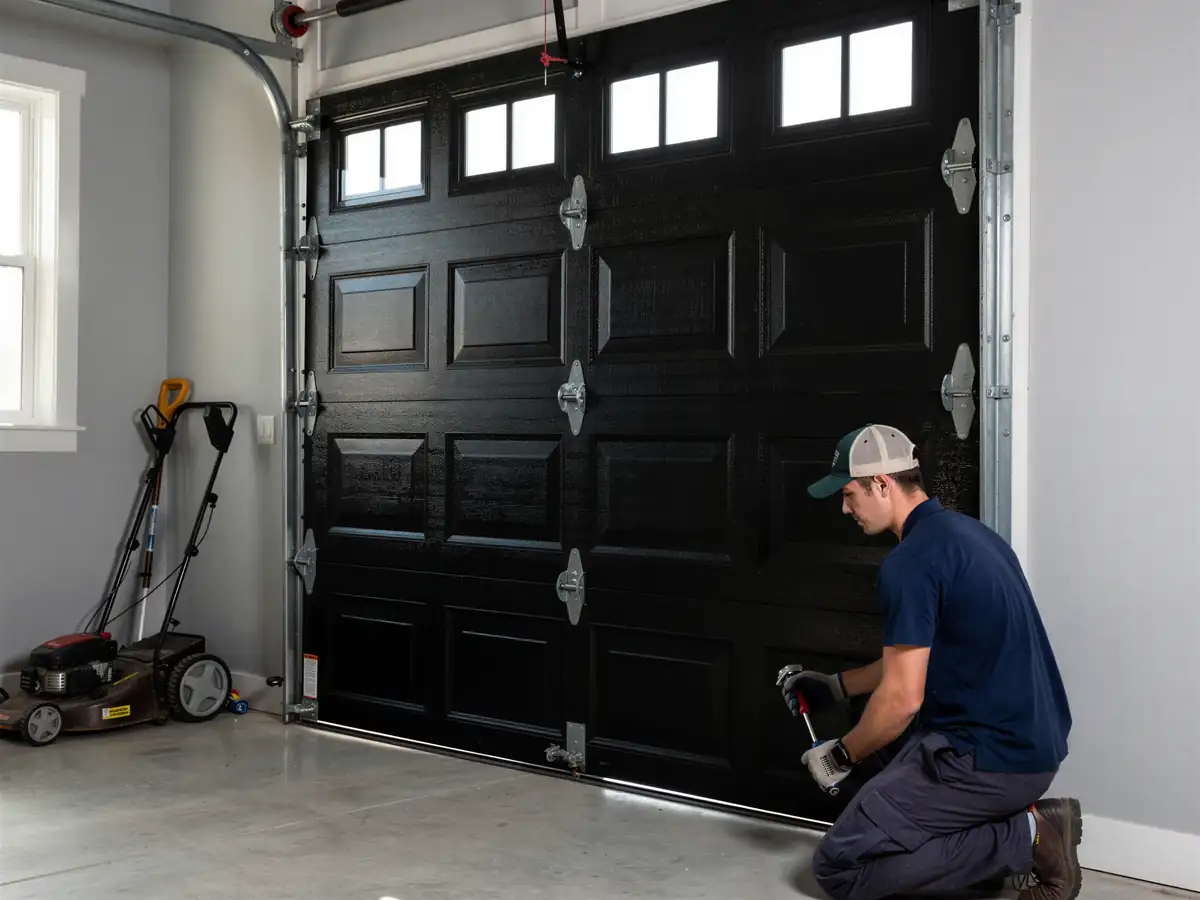
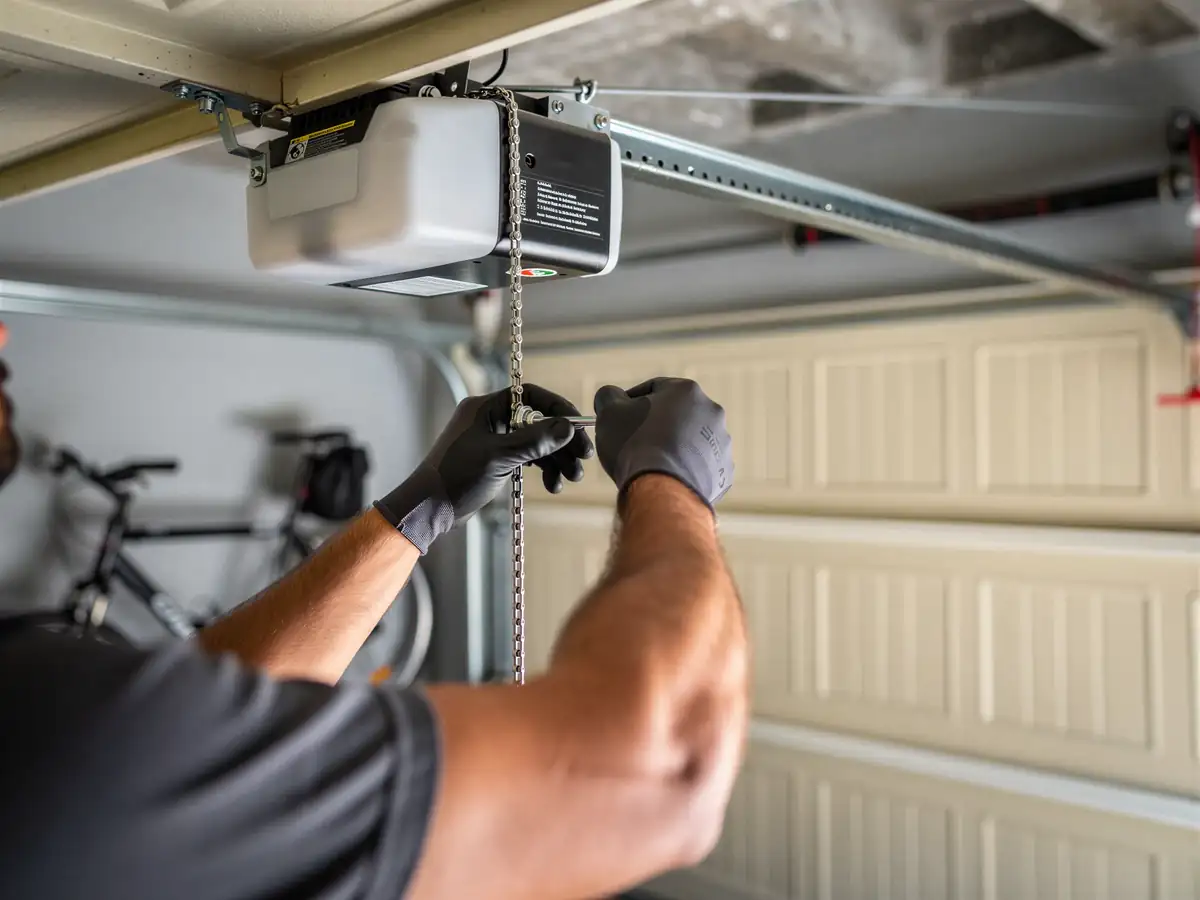
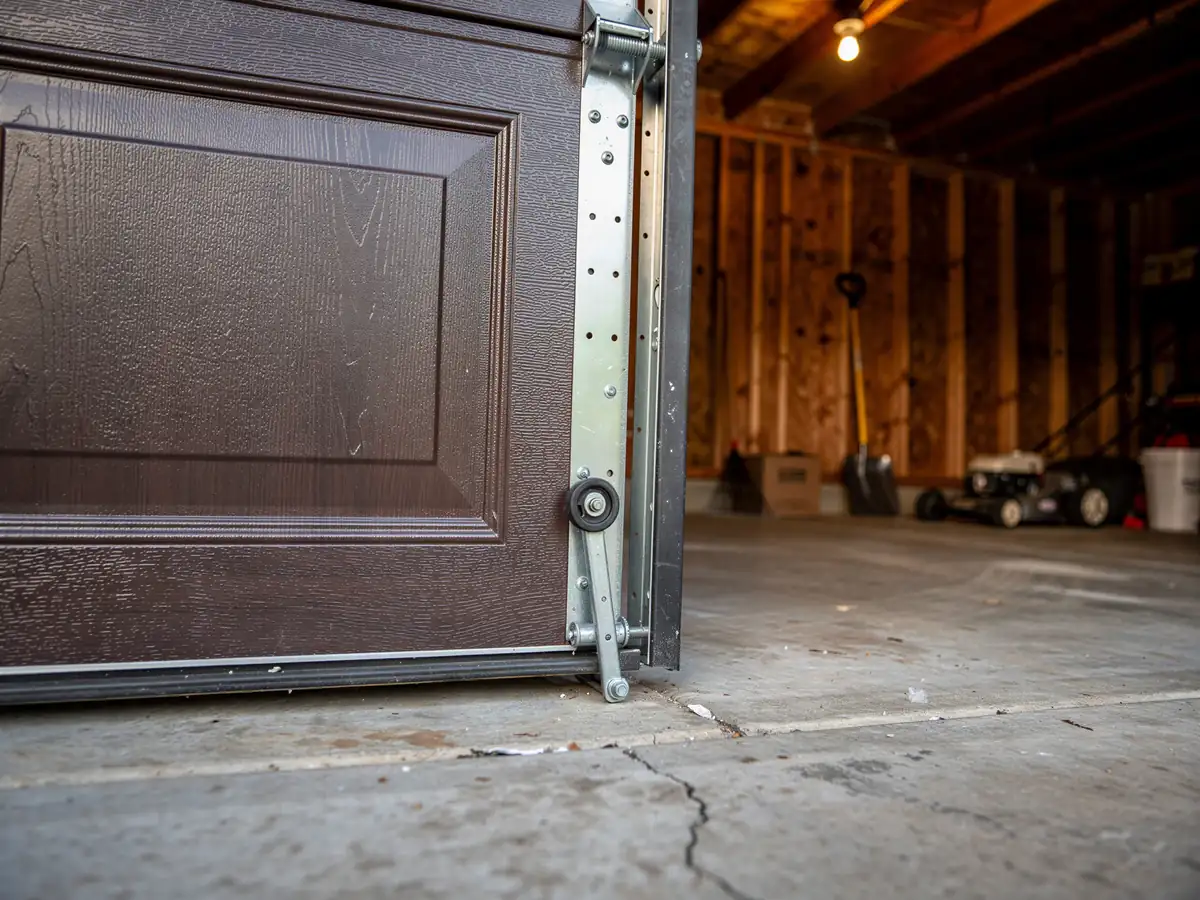
Check the rollers and hinges for rust streaks or wobble - common on original hardware that's never been lubricated. Listen to the opener. A hum with no movement usually means the gears inside have stripped, which is common once an opener passes the fifteen-year mark, and a lot of the openers out there are original to houses built in the 1970s and 80s.
Here's the honest limit: if your door is original to a house built before 1973, parts can be special order and slower to get than for anything built after. We'll tell you that up front rather than quote a timeline we can't hit.
How Local Conditions Play In
Niceville sits in a mild climate band with only occasional freeze events, not the deep-freeze cycles that crack steel tracks or seize lubricant further north. That matters for what fails and when. We don't get the frozen-track calls that towns with real winters get. What we do see is grease that's thinned out from steady warm temperatures, which means rollers and hinges run drier than owners expect and wear faster than the manual suggests.
The occasional freeze still does something, though - a cold snap on a door that hasn't been lubricated in years will tighten everything up overnight, and that's usually when a marginal spring finally lets go. It's not the cold itself doing damage; it's the cold exposing wear that was already there. We cover Niceville and the surrounding area out to about five miles southeast, and the pattern holds across that whole stretch - mild most of the year, with a handful of days that catch a neglected door off guard.
The Seasonal Bit
Because the climate here doesn't swing hard
Garage doors in Niceville run on a flatter schedule than they would somewhere with real winters and real summers. There's no spring thaw that suddenly reveals a cracked panel, no month where everyone's calling at once because the cold snapped every weak spring in town. What we see instead is steady, slow wear that shows up whenever it shows up - which means the best time to get a door checked is whenever you notice it's gotten loud or heavy, not on a calendar.
The one exception is right around a freeze event
If the forecast calls for a cold night and your door has been dragging or squealing, that's worth a look before the cold hits, not after. A spring that's been fraying all year is more likely to go on the one cold morning than on any of the warm ones before it. Outside of that, there isn't a hard seasonal rule here the way there is in places with four real seasons - it's more about the age of the hardware than the month on the calendar.