Why It Happens Here
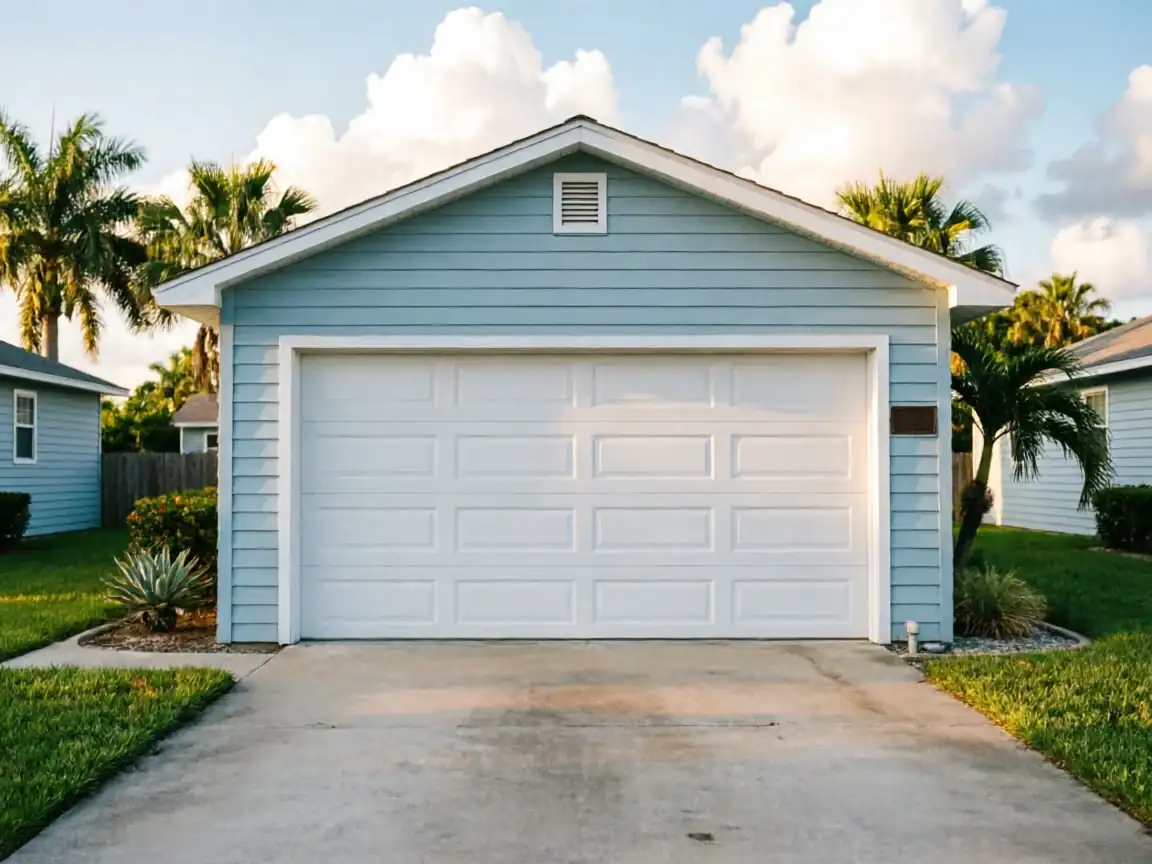
Most houses on this side of the Panhandle went up between 1973 and 2013
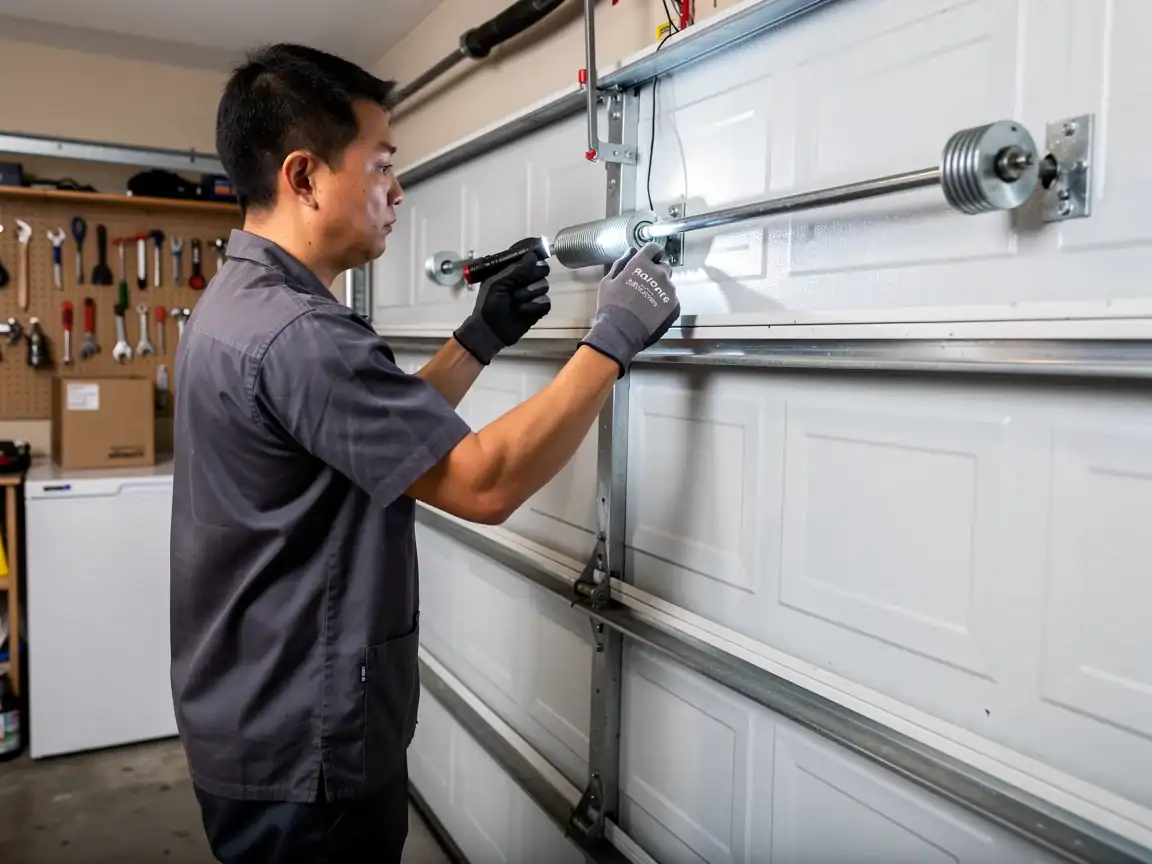
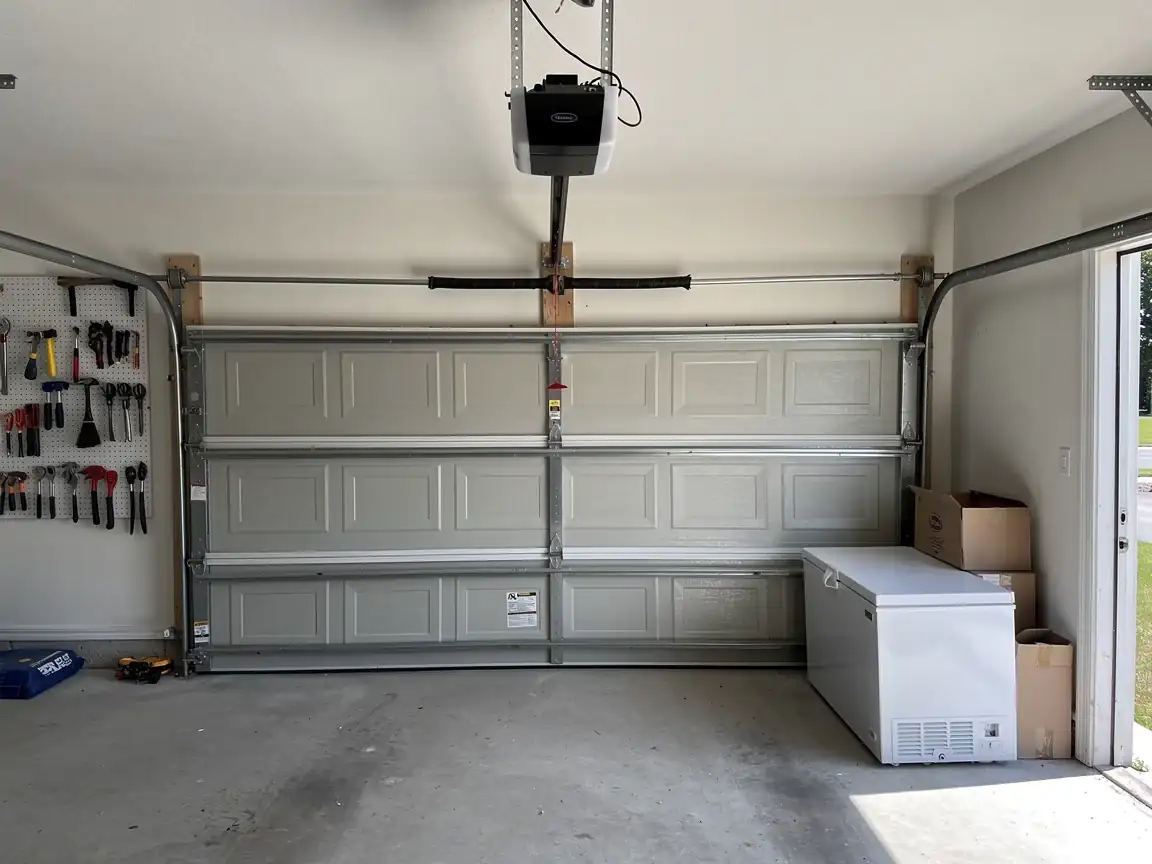
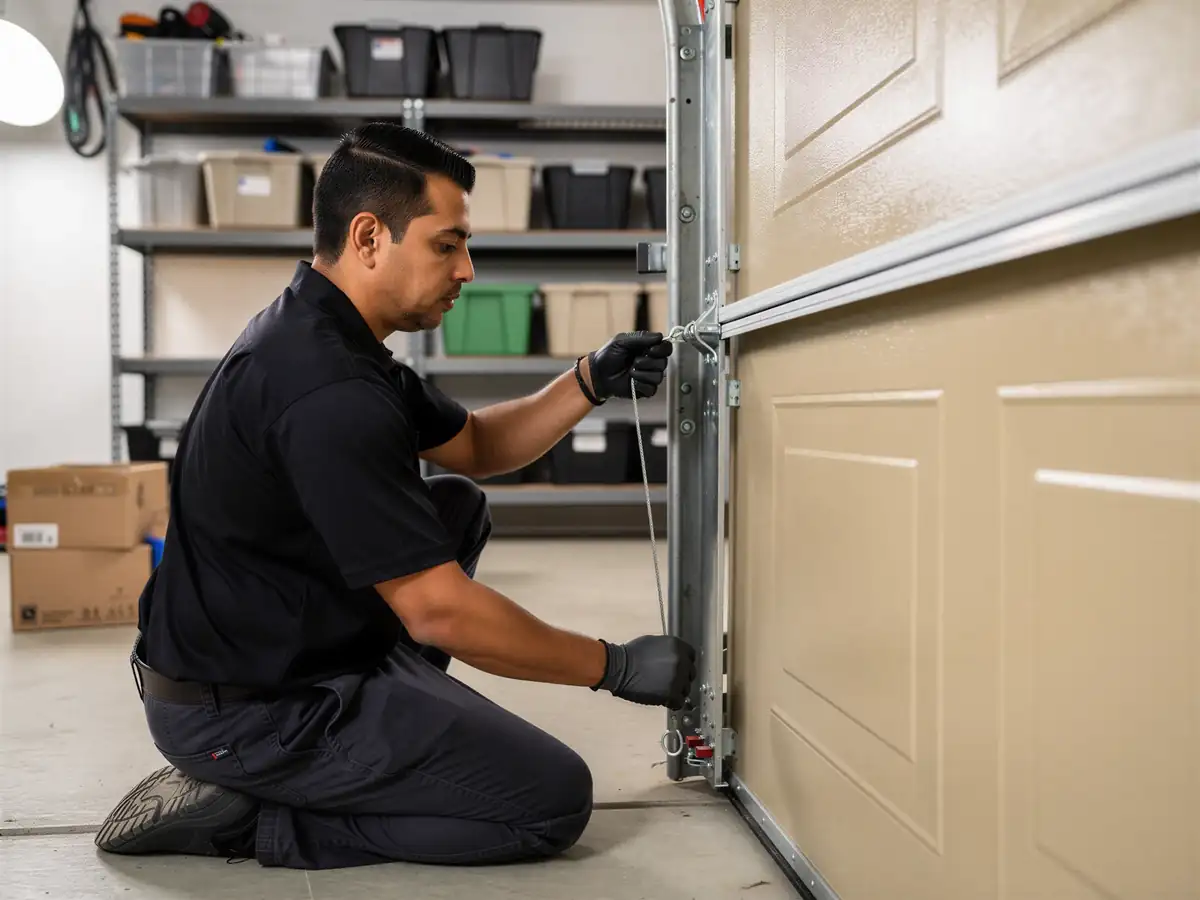
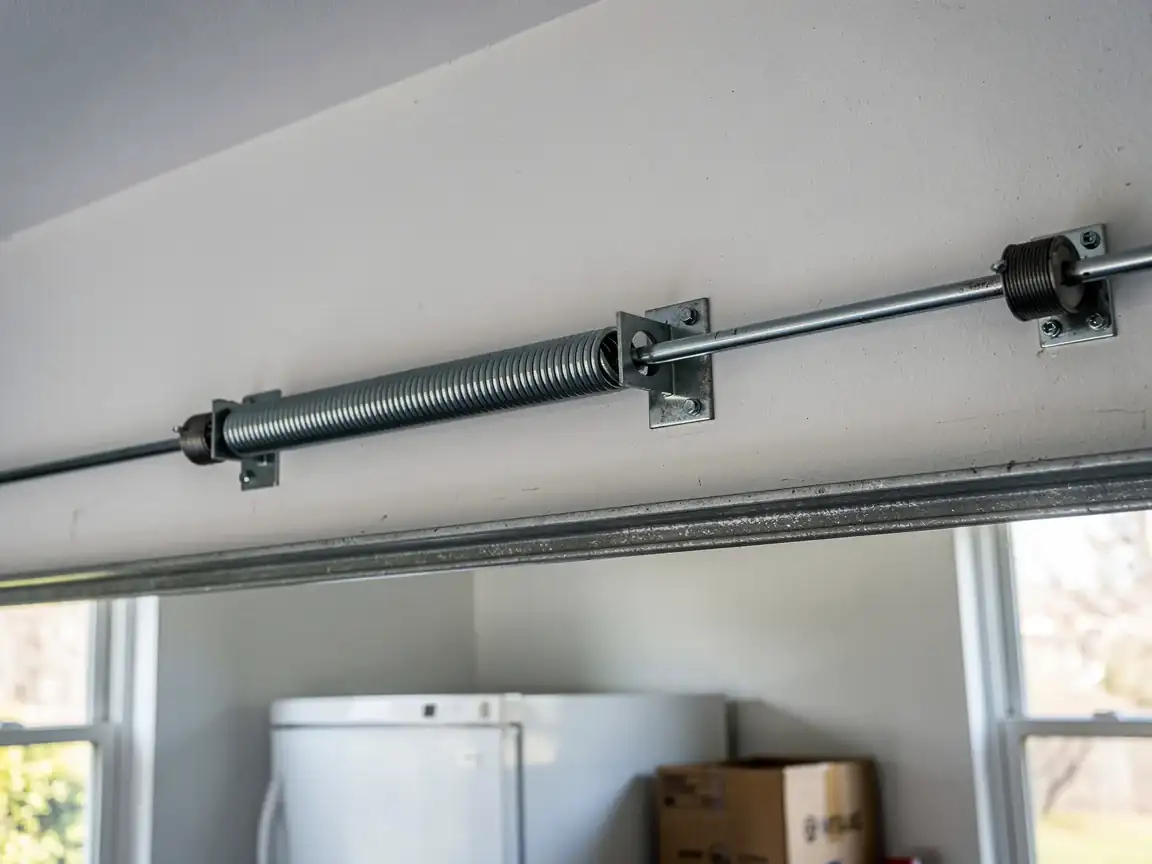
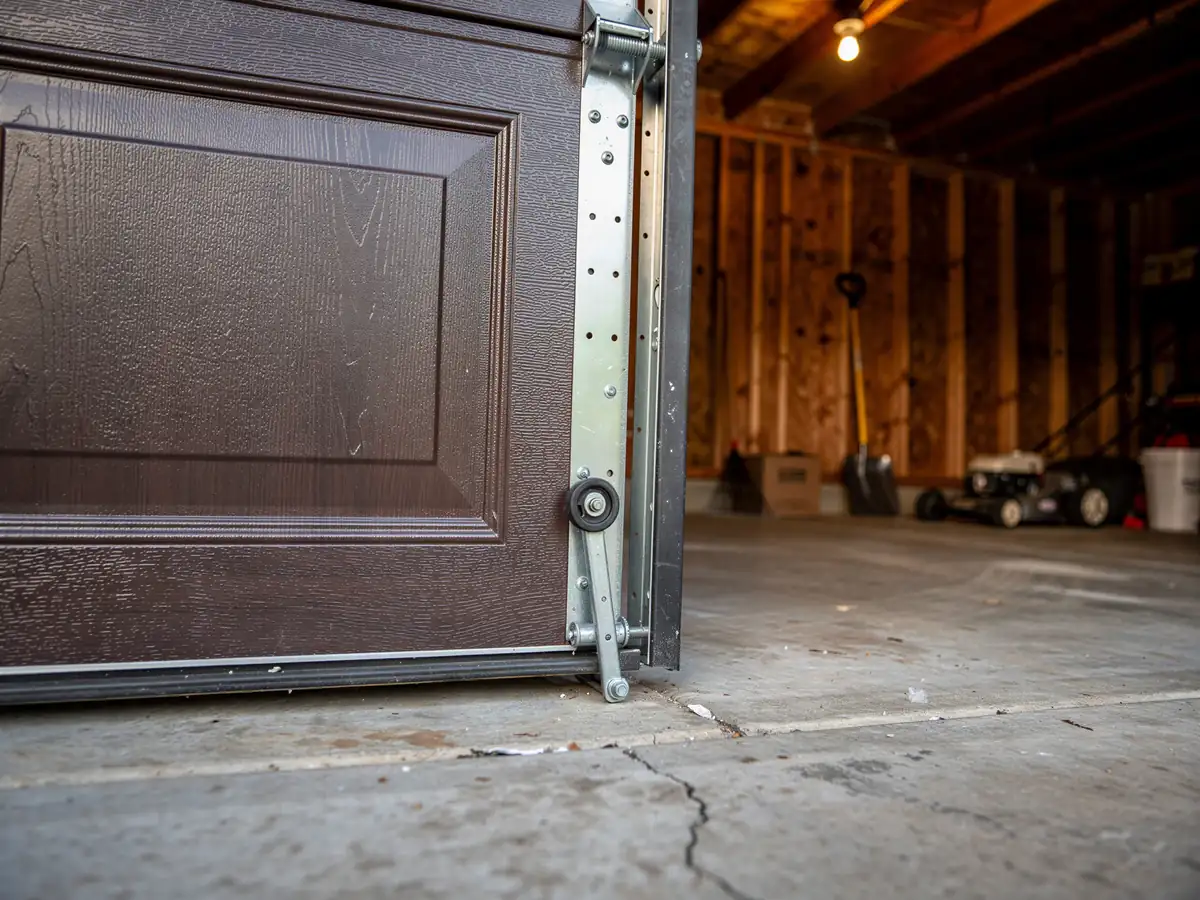
With the median build year sitting around 1979, and a lot of that stock still runs on the original steel track and roller hardware the builder put in. Track brackets get bolted to framing that's been settling for forty-plus years, and once a bracket works loose even a little, the rollers don't ride square in the channel anymore. The door still looks fine sitting shut, but the first time it runs, it binds, jumps the track, or drags one side.
The climate here doesn't bring the heavy snow load that cracks track in colder states
But it isn't nothing either. This is a mild zone with occasional freeze nights, and that back-and-forth between warm humid days and the odd cold snap works bolts loose and lets galvanized track pit slightly at the weld points over the years. It's slower damage than a storm, which is exactly why it sneaks up on people - nobody notices a bracket that's a quarter-inch looser than last year until the door actually leaves the track.
Homes in the older pockets of this stock
The ones built in the 1960s and 70s before the later wave of construction, tend to show this first. The track itself usually isn't rusted through. It's loose, bent at a hinge point, or carrying rollers that have worn down enough that they no longer sit flush.
What You Pay
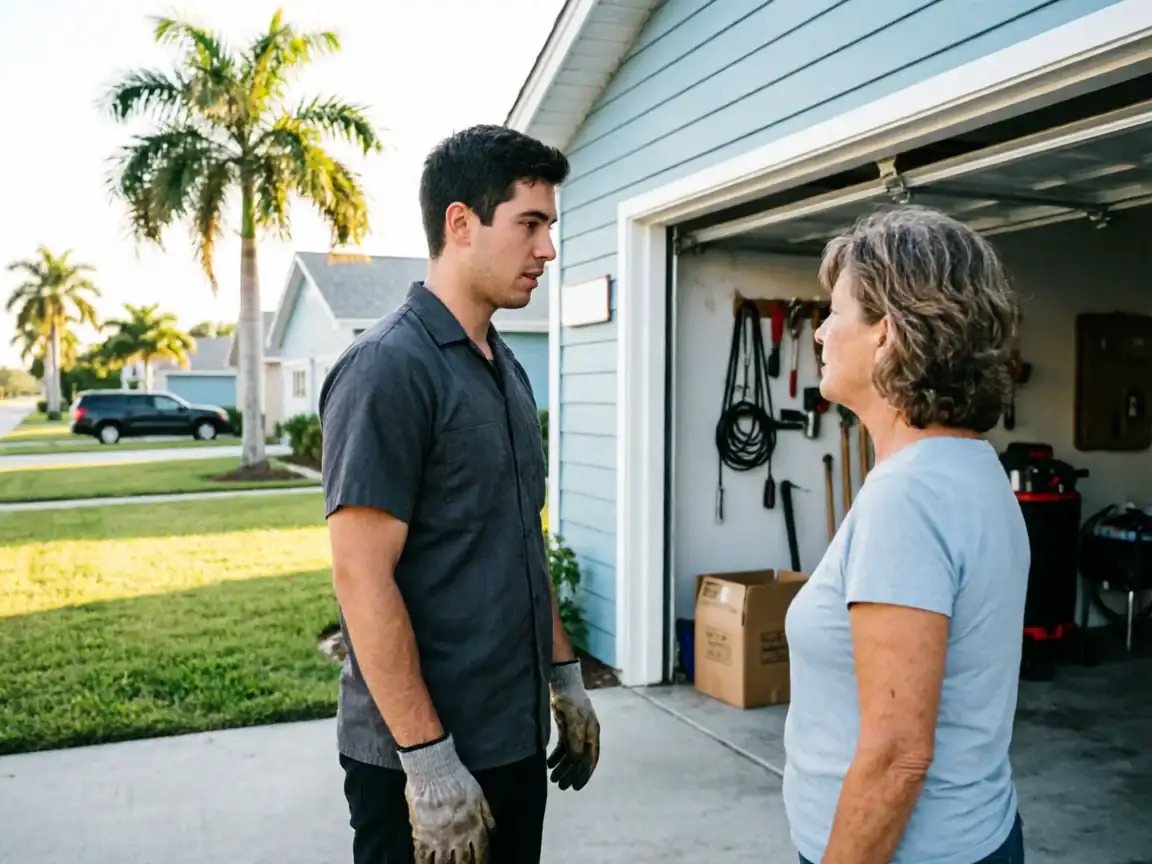
We don't quote a number without looking at the door first, and that's not a dodge - a door that's simply knocked off its track from a car bumper is a different job than one where the track is bent, the brackets are stripped out of old framing, or a spring let go at the same time and pulled the door sideways. Those are three different repairs with three different parts lists.
What we can tell you is what drives the cost up or down: whether the track needs straightening or full replacement, whether the rollers are original and worn enough to swap while we're in there, and whether the wall or header framing the bracket bolts into has softened with age - common enough in houses from this build era that we always check it before we re-hang anything.
Honest limitation: if a track is bent more than a little, we don't try to hammer it straight and call it done. A track that's been forced back into shape once tends to go again, usually at the worst time, so past a certain point we replace the section rather than nurse it along. That's a judgment call we make at the door, not over the phone.
How It Shows Up
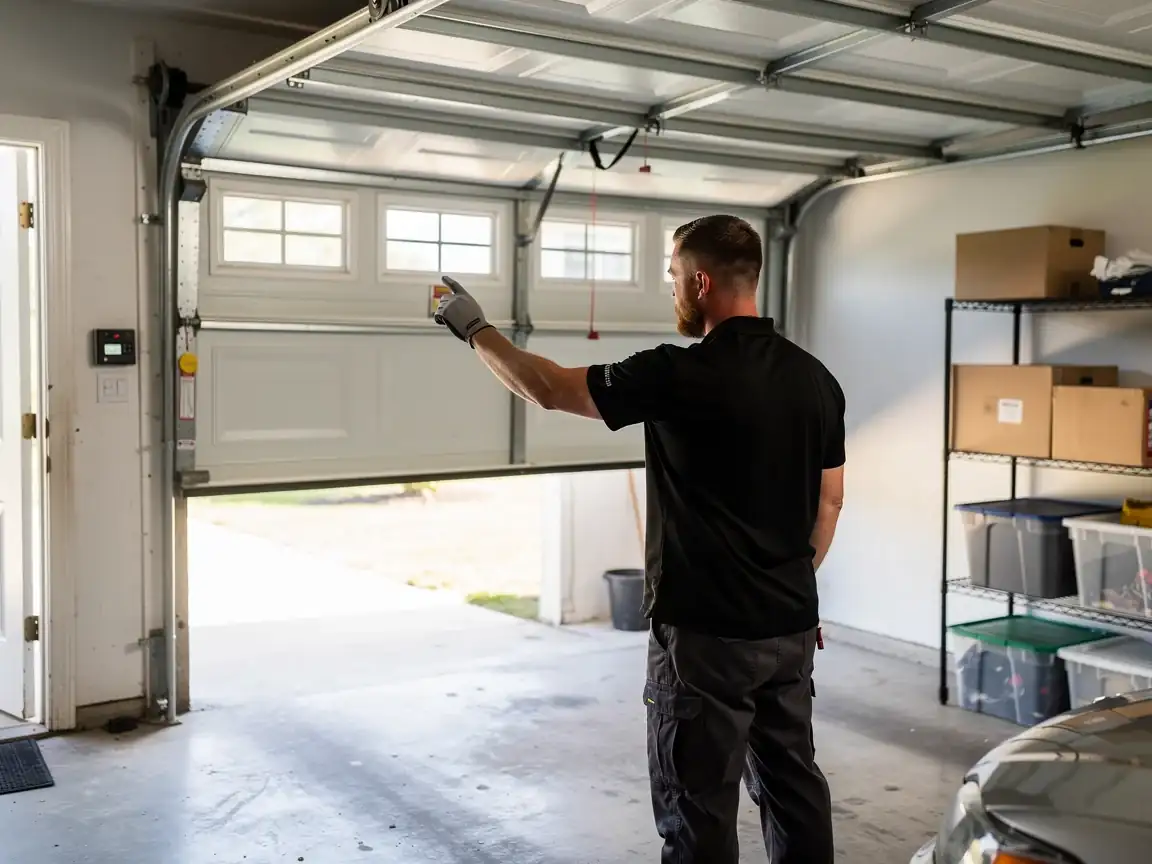
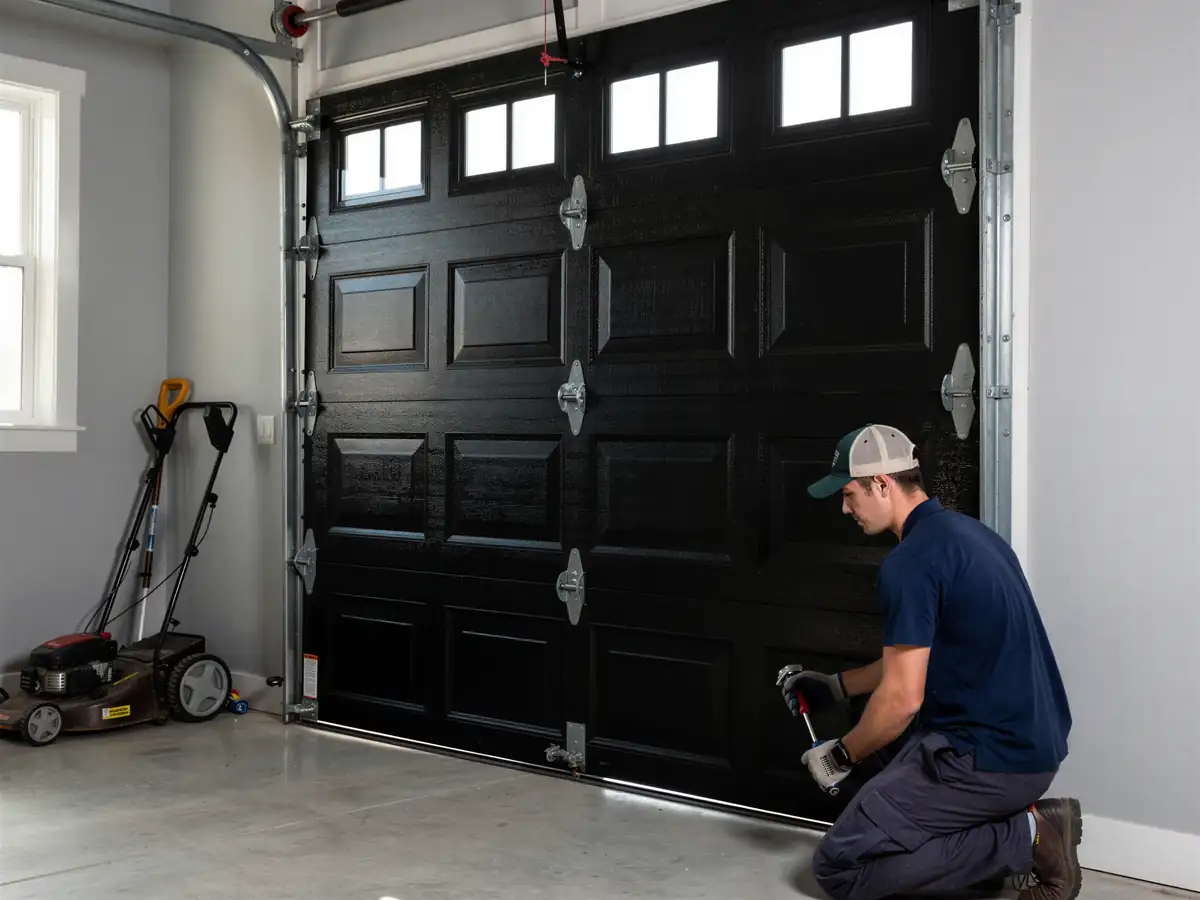
The most common version: the door runs partway up or down, then stops hard and hangs at an angle, with one bottom corner lower than the other. That's usually one roller that's popped clear of the track while the other side is still riding true, which twists the whole door on the rail.
Less obvious version: the door still opens and closes, but it rattles going through a spot it never used to, or you can see daylight between the roller and the track wall on one side. That's a bracket working loose before it fails outright, and it's the kind of thing that's easy to put off because the door still works - right up until it doesn't.
Then there's the sudden kind: a car clips the bottom panel, or a gust catches the door mid-cycle, and the whole bottom section jumps the track at once. That one's obvious immediately - the door won't move, the opener strains and clicks, and people usually kill the power to it right away, which is the right instinct. Running the opener against a door that's off track is the fastest way to turn a track repair into a track-and-opener repair.
How Long You Are Without the Door
A door that's hanging open or stuck shut because it's off track isn't safe to force
And it isn't something to leave half-fixed overnight if you can avoid it - an open garage is an open house, and a door forced back onto bent track can jump again under its own weight. Whether you can still get a car in or out while it's being looked at depends entirely on where it jumped: a door stuck most of the way up is a different situation than one jammed shut at the bottom of the track.
The bigger factor in how long the whole thing takes is parts, not labor
Straightening a track usually resolves same visit. Replacing a section, especially if the brackets need re-anchoring into older framing, means confirming what's actually back there before it gets closed up again. If a spring or cable failed at the same time the door came off track - which happens more than people expect, since a snapped spring lets the door fall unevenly and can pull it sideways off the rail - that adds its own parts and its own time.
We can't give a blanket number for every house
Since the service area runs from Niceville out through Valparaiso, Lake Lorraine with houses of different ages and different track setups. What we can tell you at the door, once we've seen it, is whether you're looking at an hour's fix or a return trip for parts.