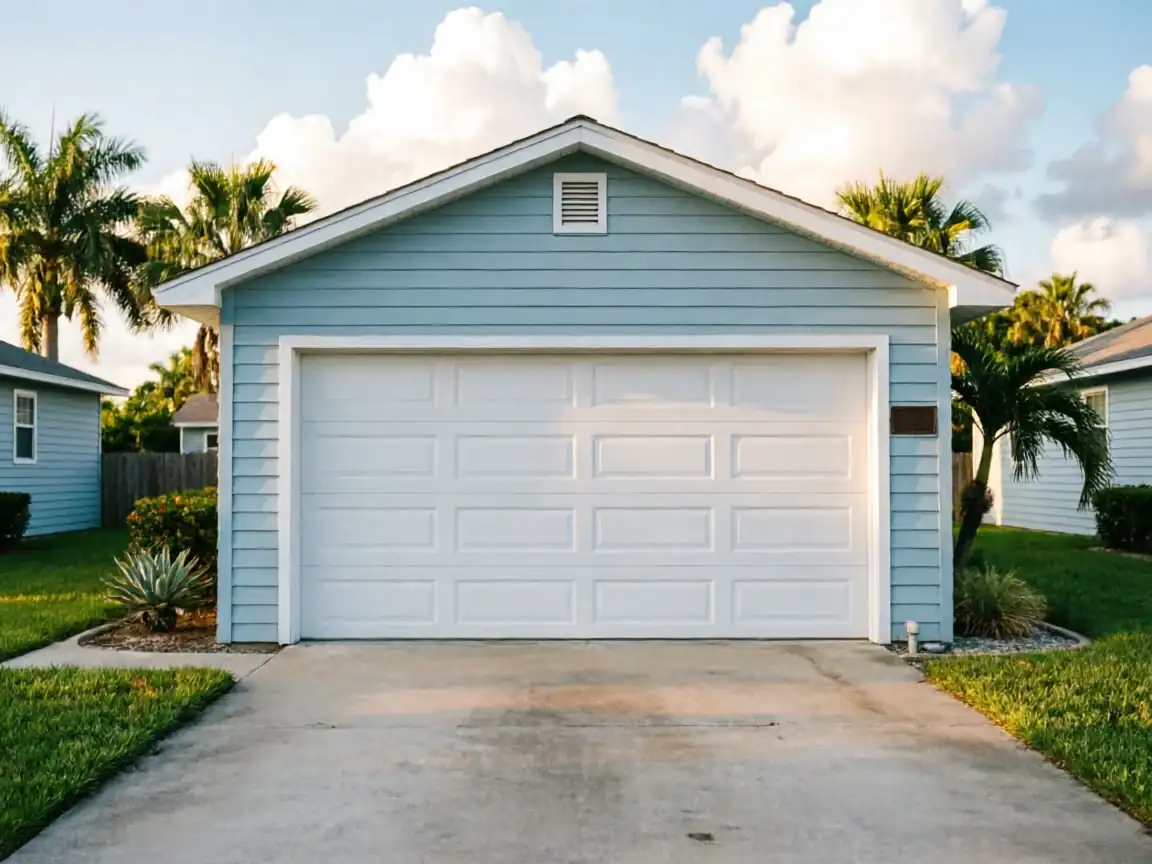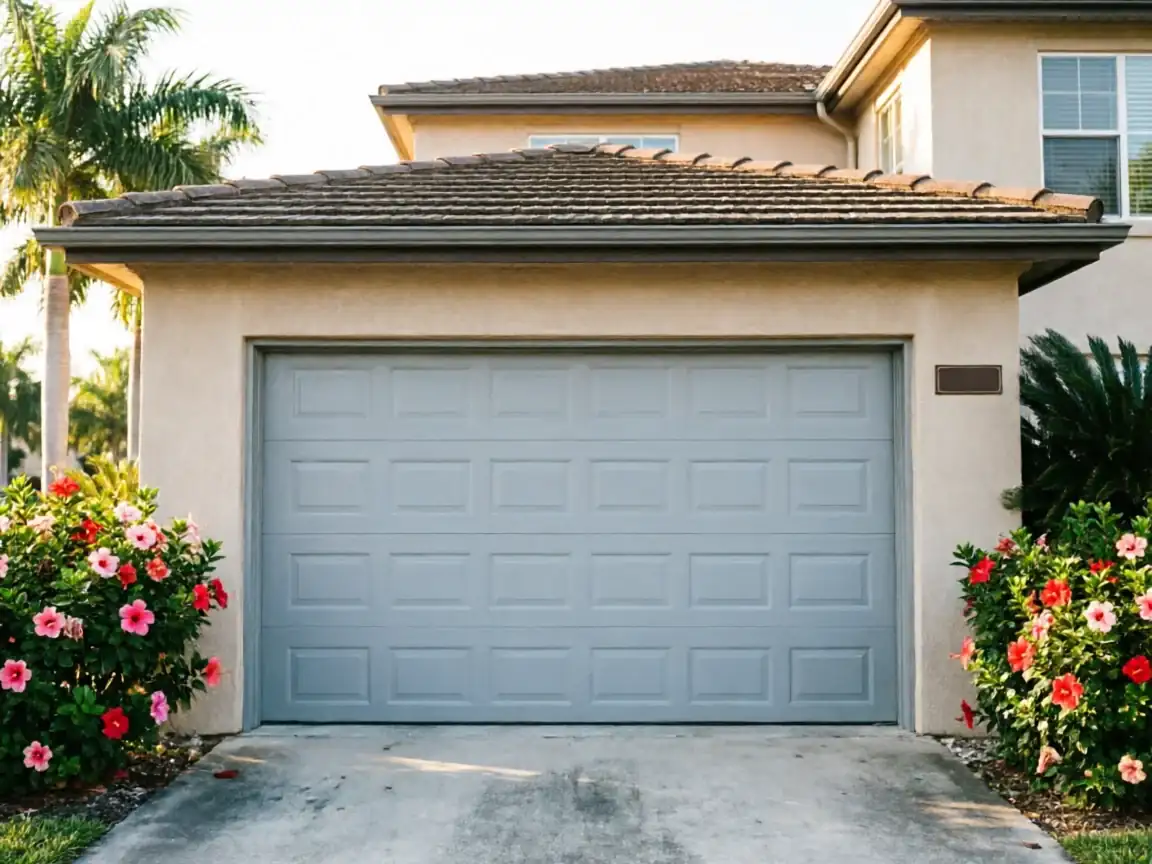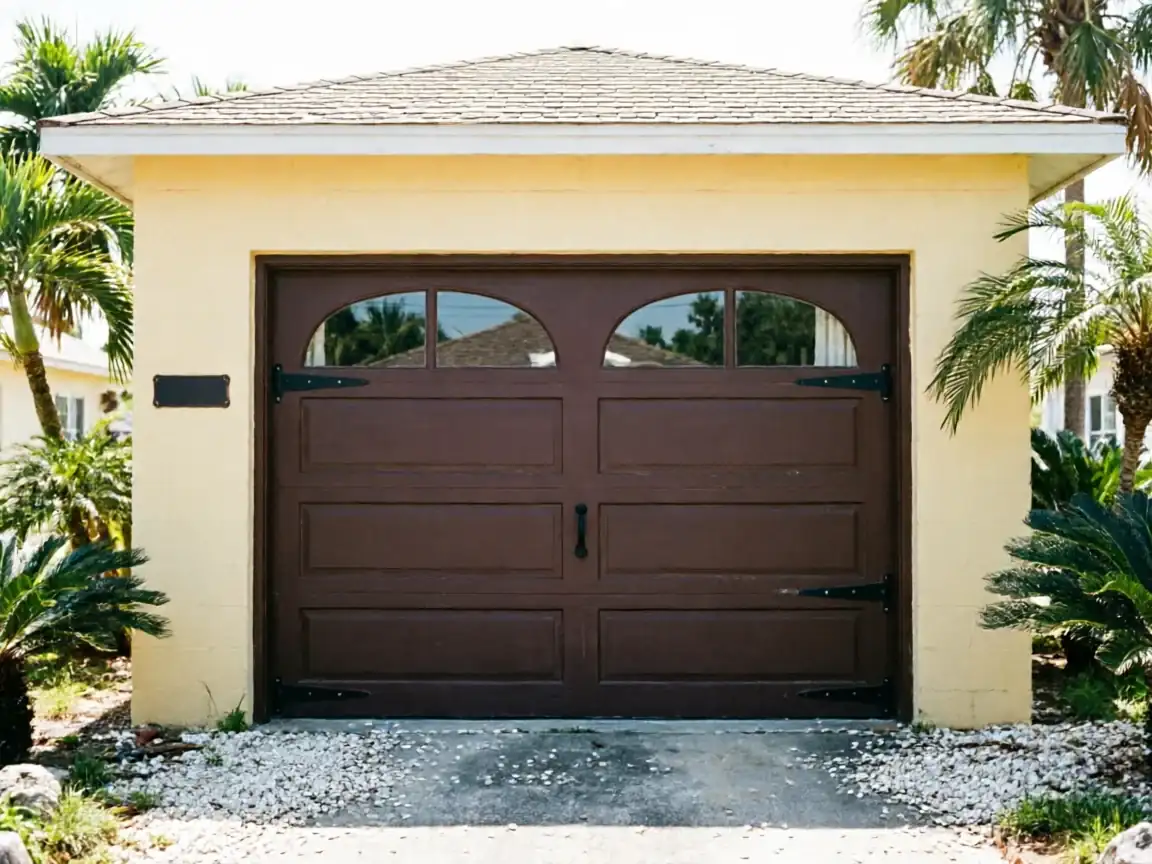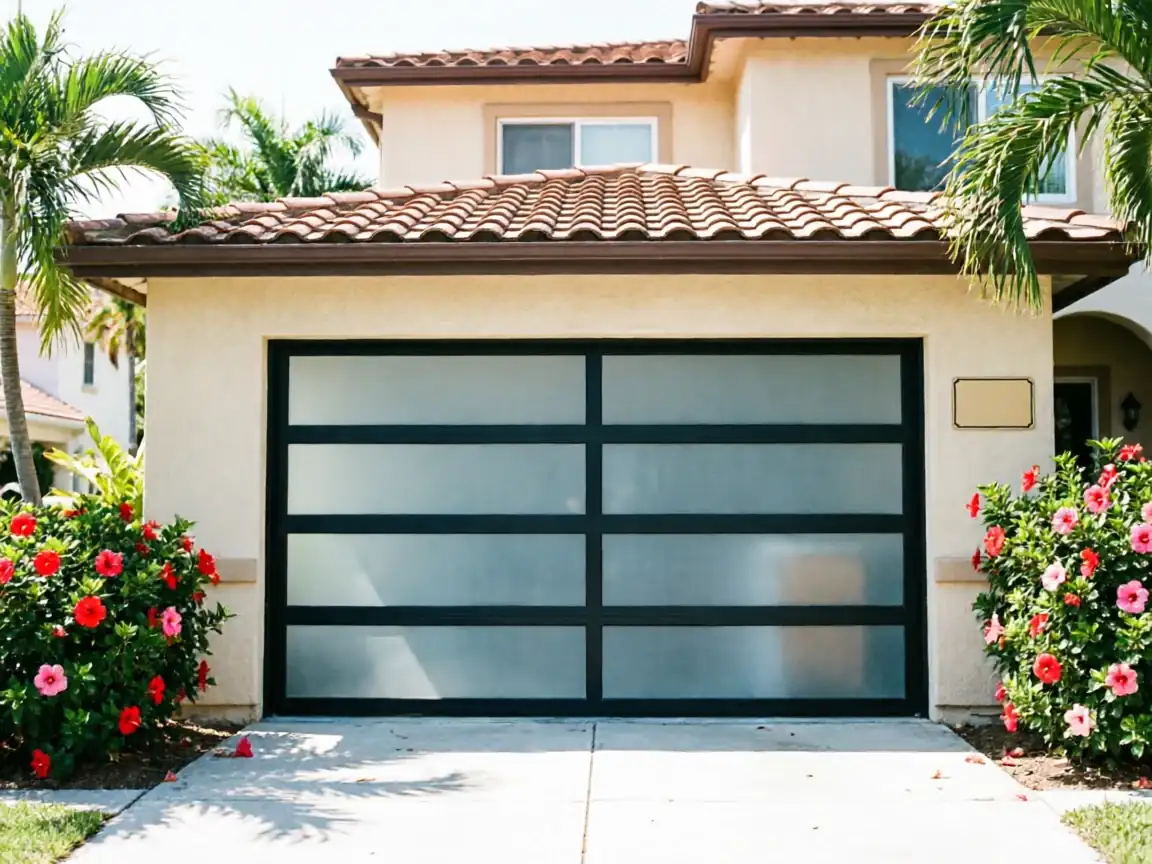
Why It Happens Here
Most of the houses this company works on across the Niceville area were built between 1973 and 2013
With the median build year sitting around 1979. That matters for springs because a torsion spring has a rated cycle life, and a door installed in the late 1970s or early 1980s has had four decades to run through those cycles. Across the seven named communities we cover - the stock skews 1960s-70s, which means a lot of original or first-replacement springs that were never upgraded when the door got a new opener bolted on.
The climate here is mild with occasional freeze, not the heavy freeze-thaw cycling you'd get further north
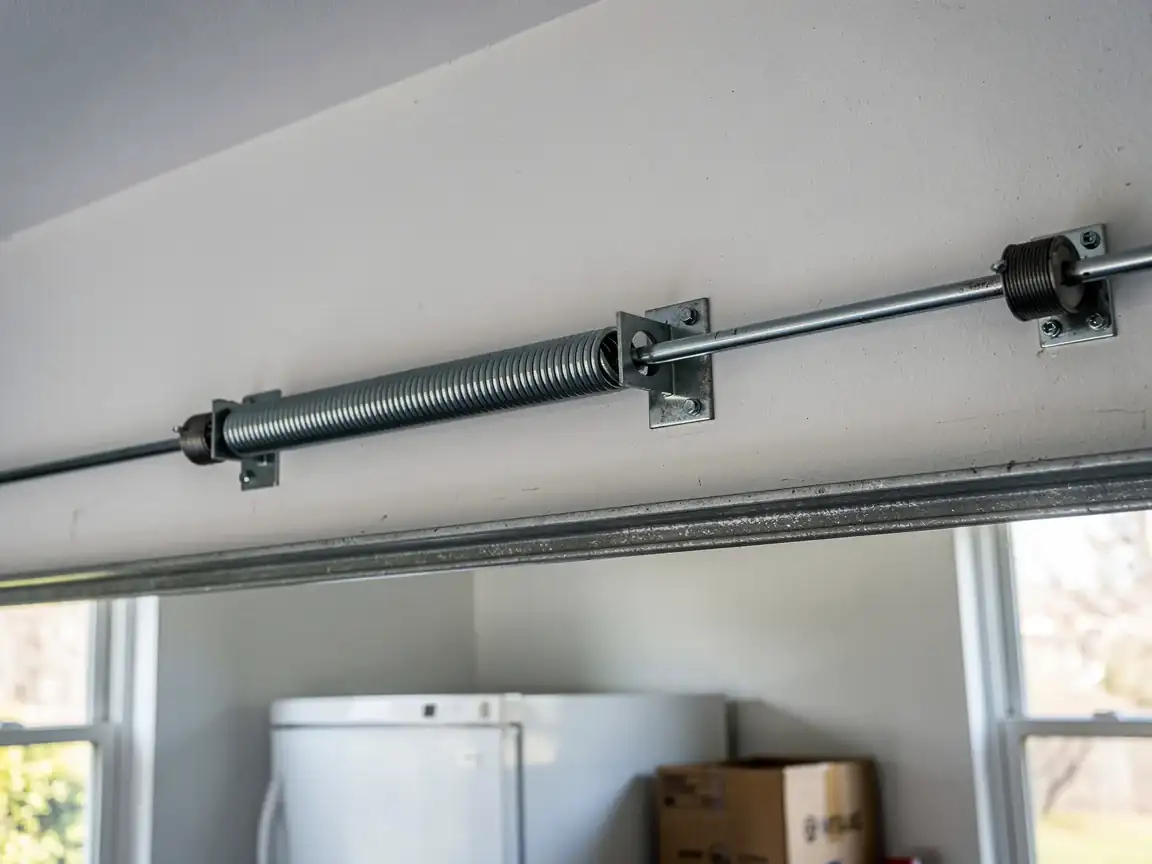
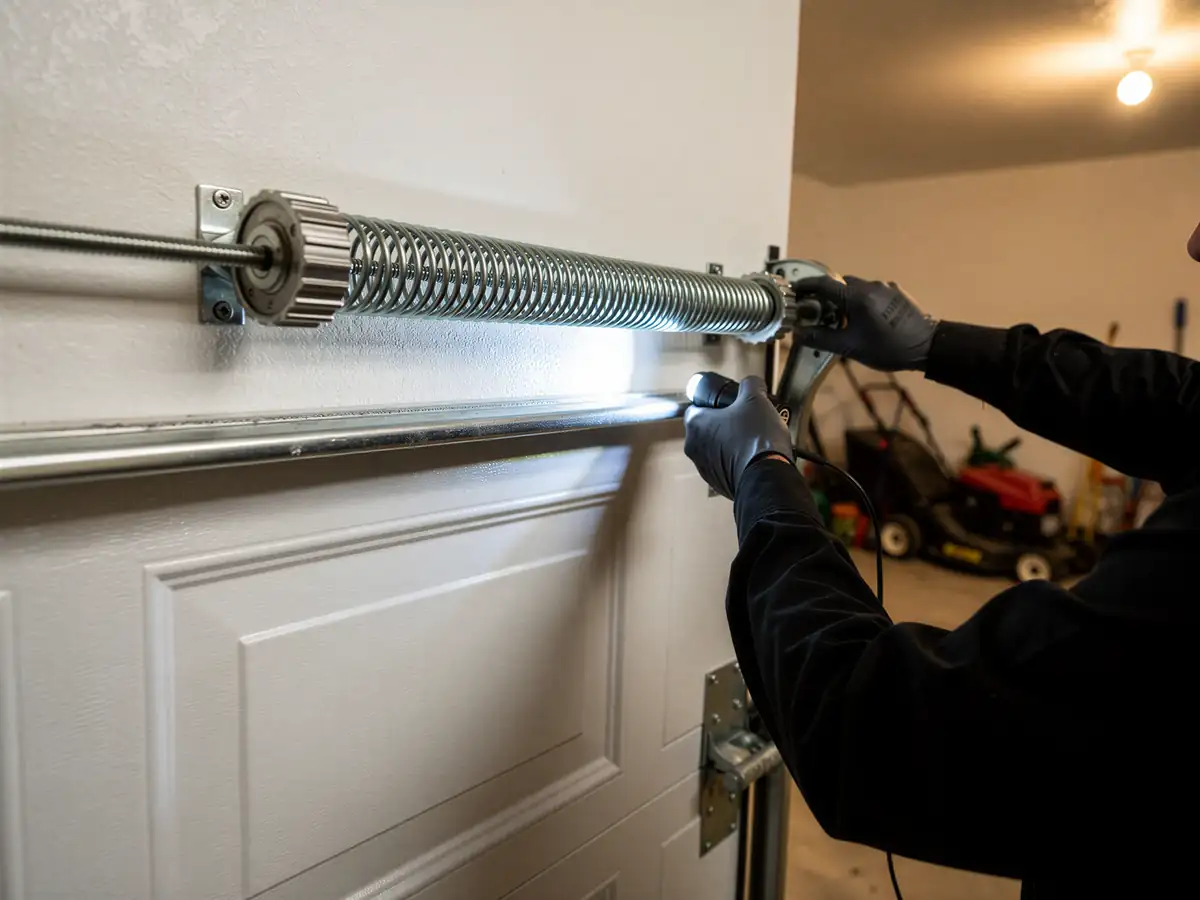
So rust-through on the spring coil itself is less of a driver than it is in colder states. What we see instead is straightforward fatigue: a spring wound to the same tension for 35-40 years eventually lets go, usually at the coil-to-cone weld or at a worn end stationary cone. Garages that sit unconditioned in Gulf Coast humidity also see slow corrosion at the winding cone, which weakens the steel faster than a dry climate would.
- 40 years
So the pattern across this service area is age-driven, not storm-driven
Original torsion springs from the 1970s-80s housing boom reaching the end of their life around the same time, regardless of which side of the area you're on.
What You Pay
We don't have a fixed number to quote you here, because spring repair cost depends on spring size, whether it's a single or double door, and whether the cable or drum also needs replacing after a break. What we can tell you is what drives the number up or down. A standard single-spring single door is the simplest job. A double-wide door usually runs two springs, and if one broke under tension it often stressed the other, so replacing both at once is common and reasonable, not an upsell.
Across the area we serve, median household income is $81,938 with 8,743 owner-occupied houses out of 14,374 households total. That's a homeowner-heavy market, which is part of why spring repair - a repair, not a full door replacement - is usually the right call unless the track or panels are also damaged. If the opener forced itself against a broken spring, you may be paying for a drum or cable too, and that only shows up once we're looking at the door in person.
One limitation worth saying plainly: we quote on-site, not over the phone, because guessing a spring gauge wrong means a return trip and a second charge nobody wants.
How It Shows Up
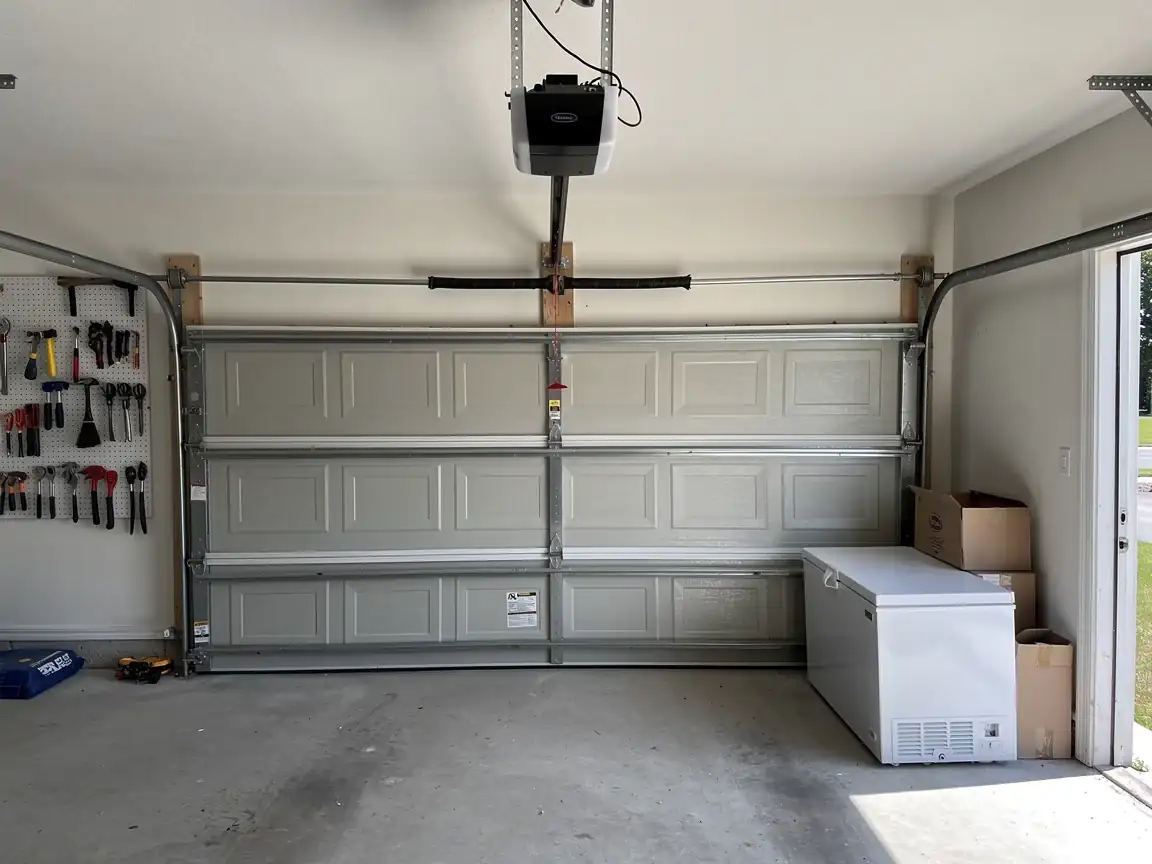
The classic sign is a loud bang from the garage, usually when nobody's touched the door - that's the spring letting go under its own wound tension, not something you did. After that, the door either won't budge when you pull the release cord, or the opener strains and reverses partway up because it's trying to lift the full weight of the door with no spring assist.
On the older torsion setups common in this area's 1970s-era housing, you'll sometimes get a slower warning first: the door starts drifting down on its own after you open it, or it feels heavier at the bottom of the travel than it used to. That's a spring losing tension gradually rather than snapping outright, and it's the better time to call, before the metal fatigues to a full break.
A second, less common sign is one side of the door looking crooked when it's partway open - that points to one spring on a double-spring system failing while the other is still holding. Don't run the opener repeatedly trying to force it; that's how a cable snaps too, and that's a second repair stacked on the first.
How Long You Are Without the Door
A broken torsion spring on its own
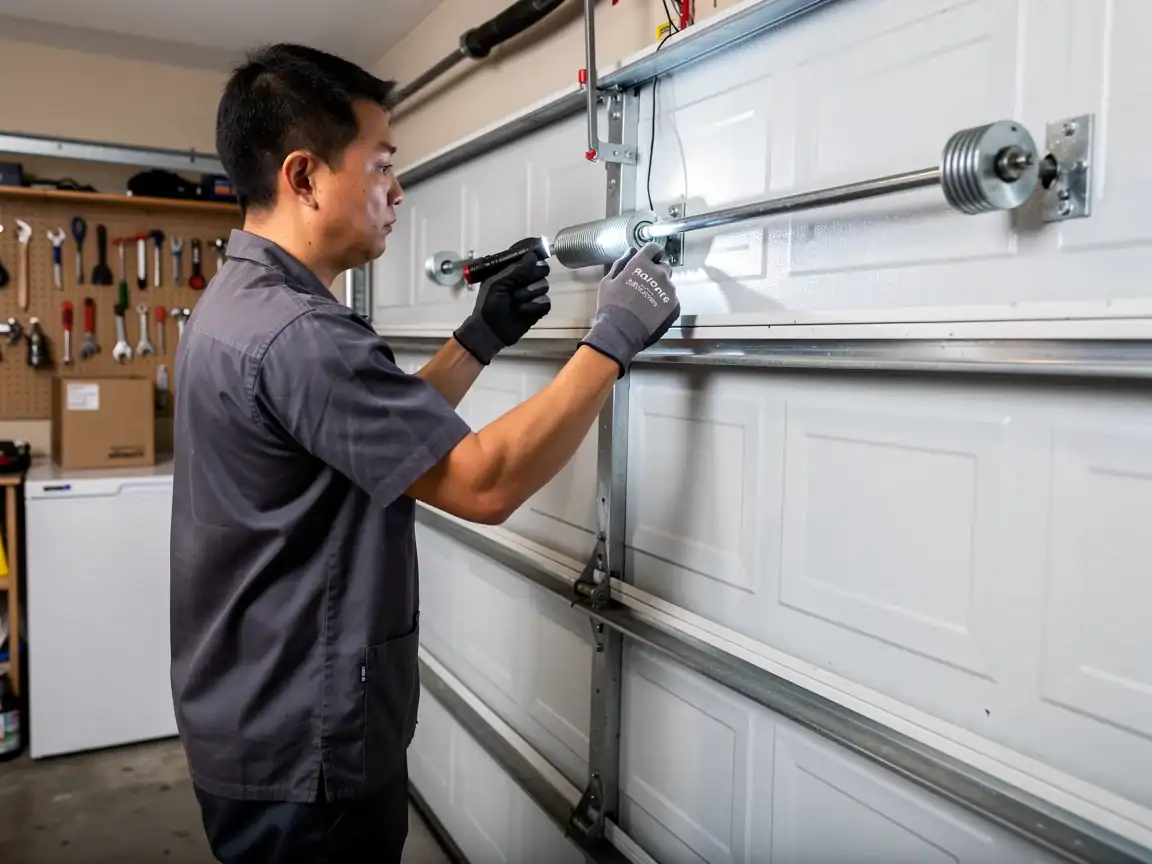
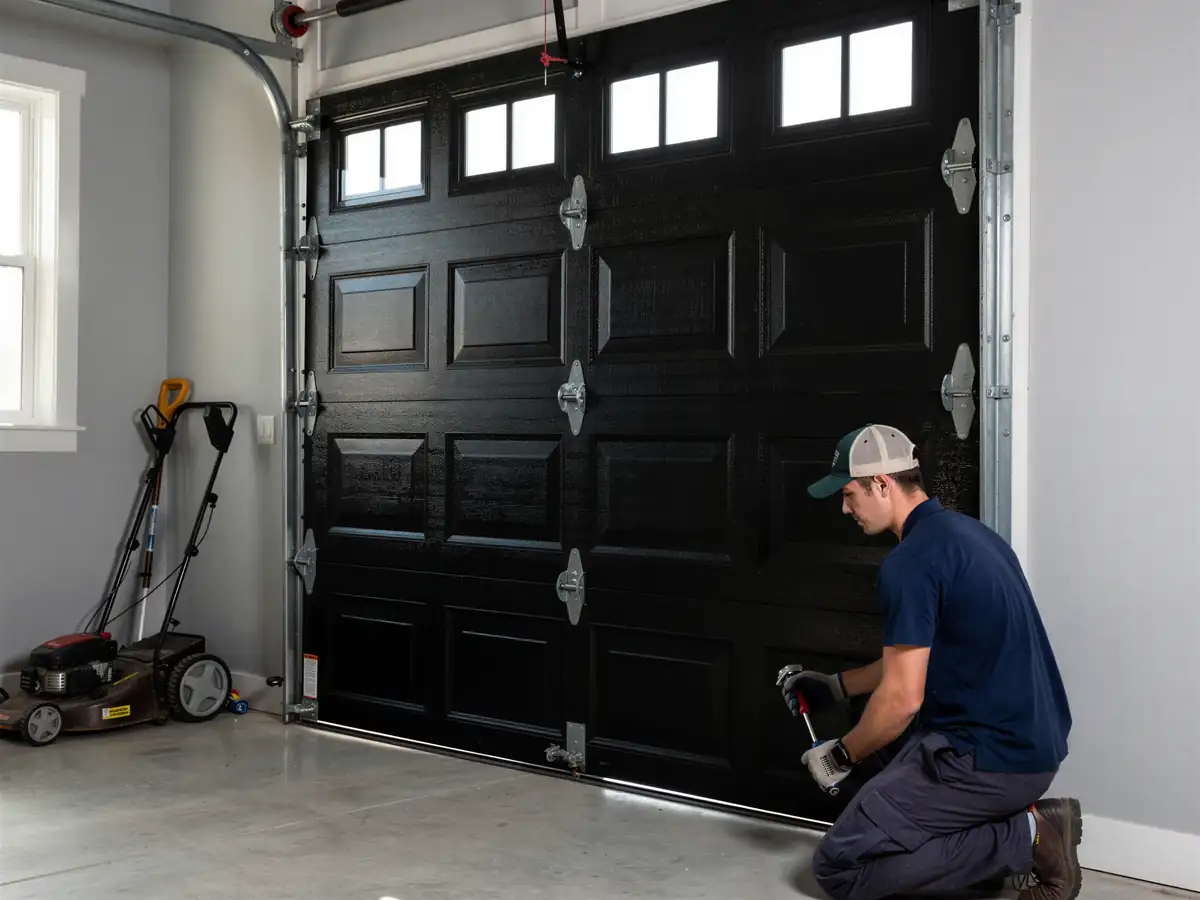
With no secondary damage to the track, cable, or drum, is usually a same-visit repair once a truck is on-site with the right spring on board. The job itself - removing the old spring safely under tension, fitting the replacement, balancing the door - doesn't take long once we're there.
What extends it is parts
If the door takes a spring size we don't carry as stock - which happens more on older or less common door models from the original 1970s-80s construction era - we may need to order it, and that's a real gap, not something we can promise away. If a cable or drum also failed when the spring broke, that adds time on-site but rarely adds a second trip.
The practical advice: don't try to force the door open or closed once a spring has gone
That's the single fastest way to turn a one-visit spring job into a two-visit job with a bent track or a snapped cable on top of it.