Stocked Parts
Most of the cable failures we see out in Lake Lorraine trace straight back to the build years
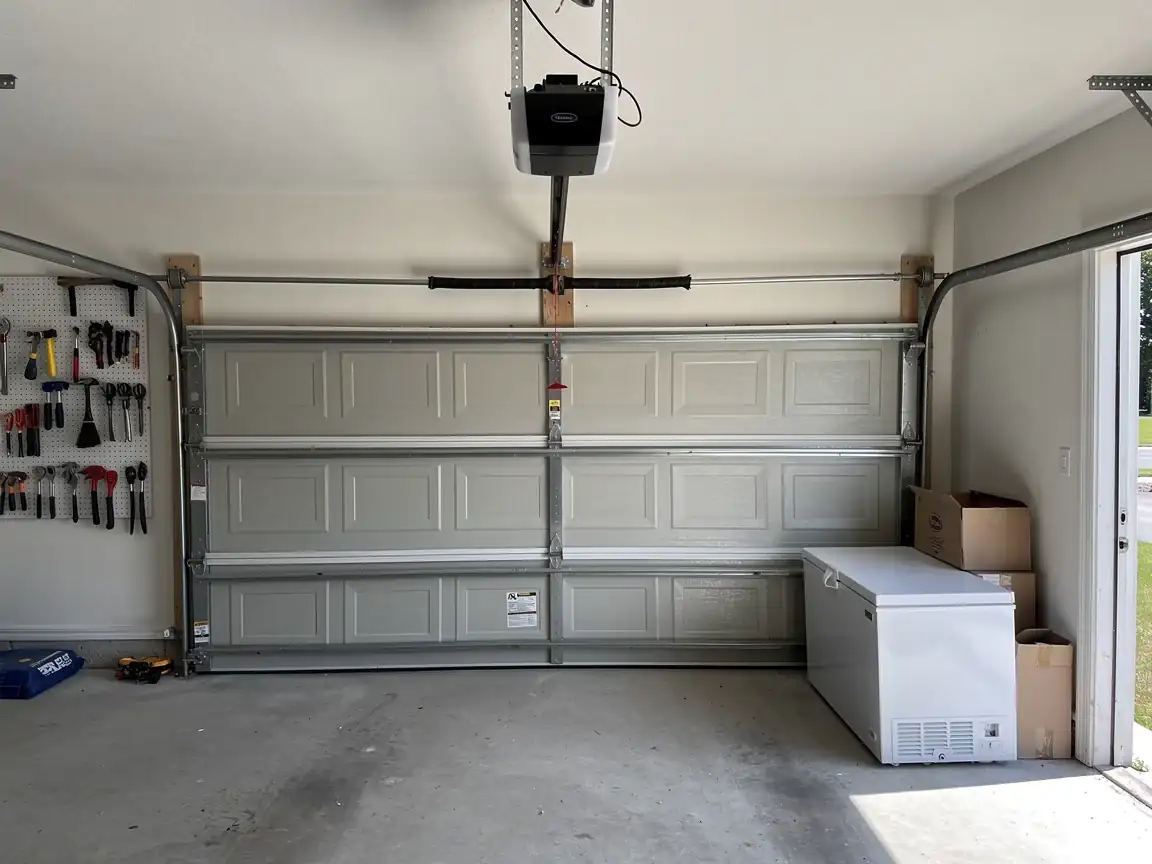
Homes here went up mostly in the 1970s and 80s, with a median year of 1979 across the wider service area, and that means a lot of doors are still running on the drums, tracks, and lift cables that came with the house. Galvanized aircraft cable from that era wears from the inside out - the strands fray against the drum groove long before the coating looks bad from across the garage, so a cable that looks fine snaps without warning on a cold morning cycle.
We carry the cable gauges and drum sizes that match that stretch of construction
Plus the standard sizes used on newer replacement doors, because a lot of Lake Lorraine garages have had the door swapped once already since 1979 without the opener or track getting touched. That mismatch is its own small problem - a new door hung on an old track with the wrong cable length pulls unevenly and chews through rollers fast.
We don't stock every obscure drum pattern on the truck
If your door uses an odd aftermarket drum from a builder that's since gone under, that part may need a day to source. We'll tell you straight if that's the case instead of jury-rigging something that'll strand the door again in a month.
What You Pay
Lake Lorraine sits in a part of the service area with a median household income around $91,619, noticeably higher than some of the other stops we make from Niceville, and that shows up in what gets fixed versus replaced. Owners here are more likely to ask for a full cable-and-drum service on both sides of the door rather than patch the one that broke, since the second cable on a door built in the same era is usually close behind it.
We price the job by what's actually failed - a single snapped cable on one side is a different bill than a pair of worn cables plus a drum that's grooved out from twenty-plus years of the old cable riding it. We don't have a flat number to quote here without seeing the door, and we won't pretend otherwise. What we can tell you is that replacing both cables on a door this age at the same time almost always costs less than two separate truck trips six months apart.
How We Fix It
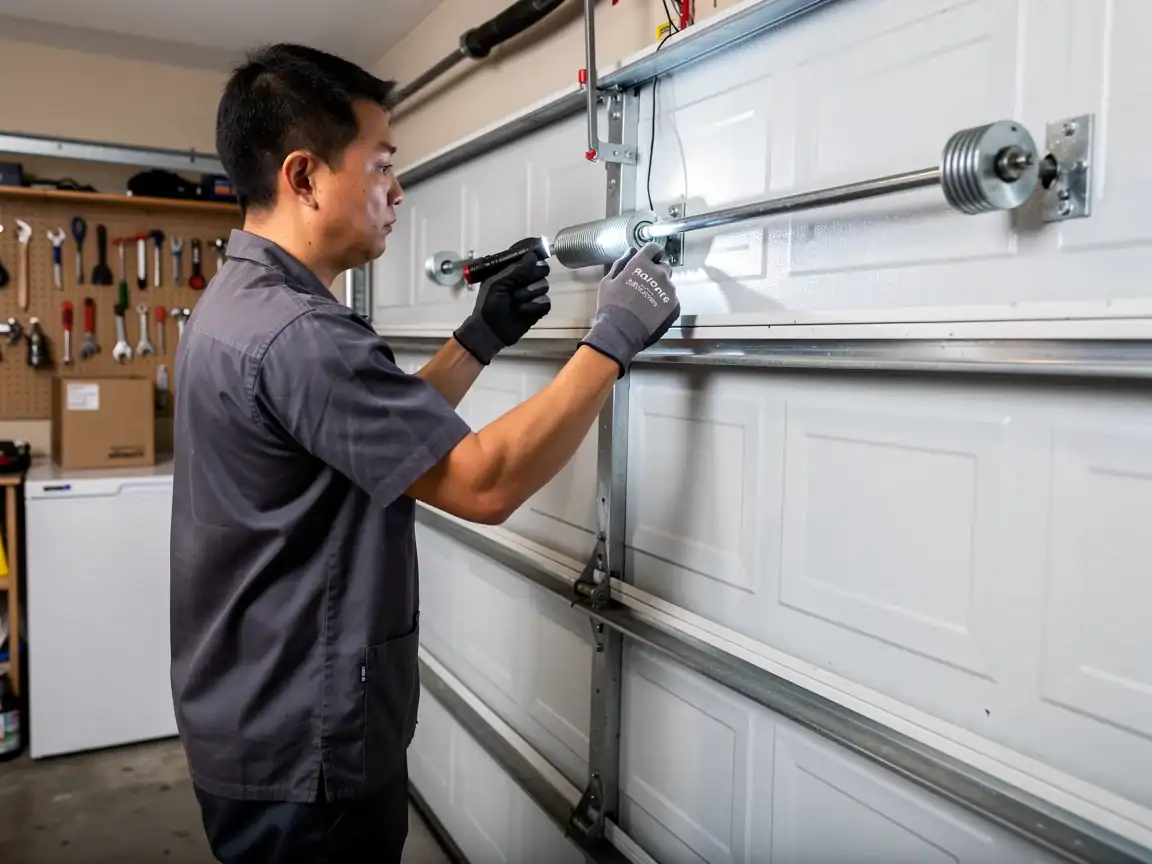
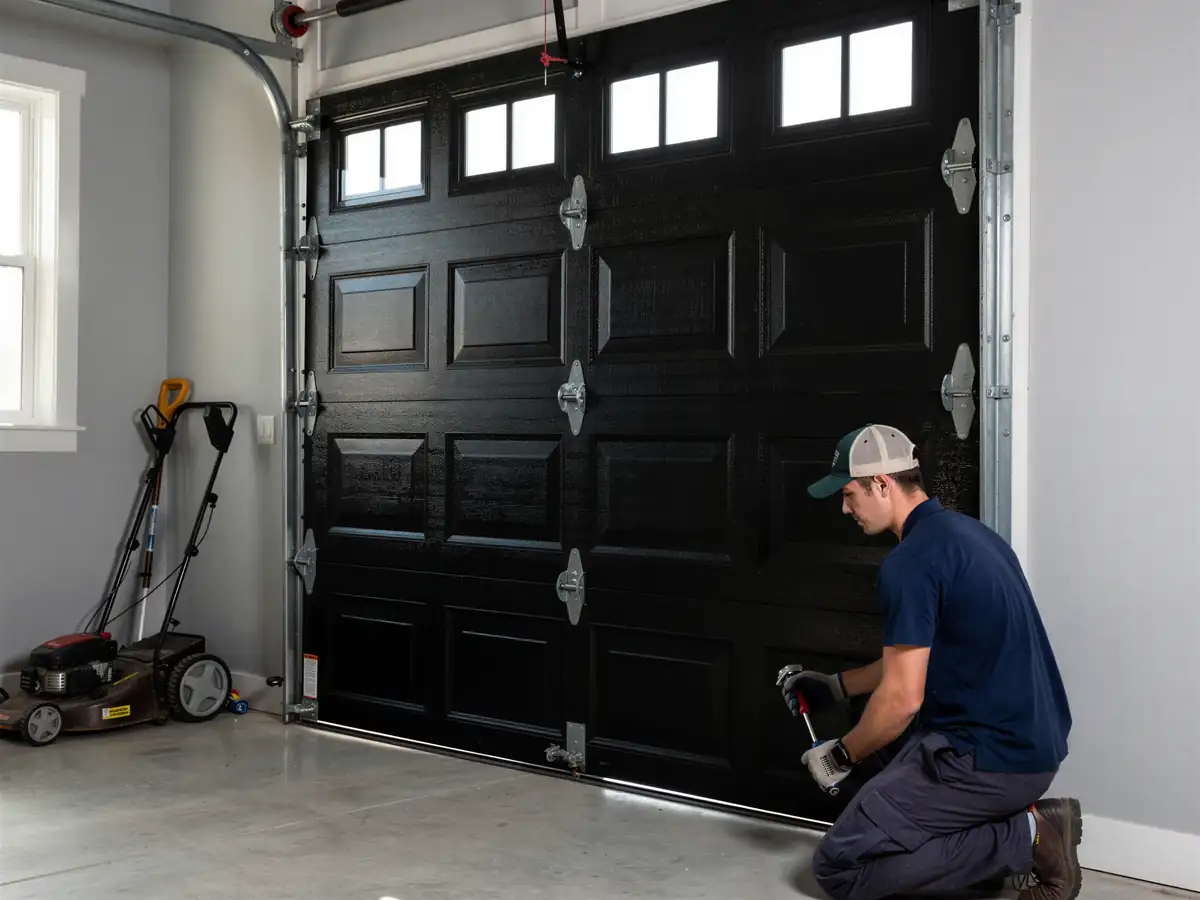
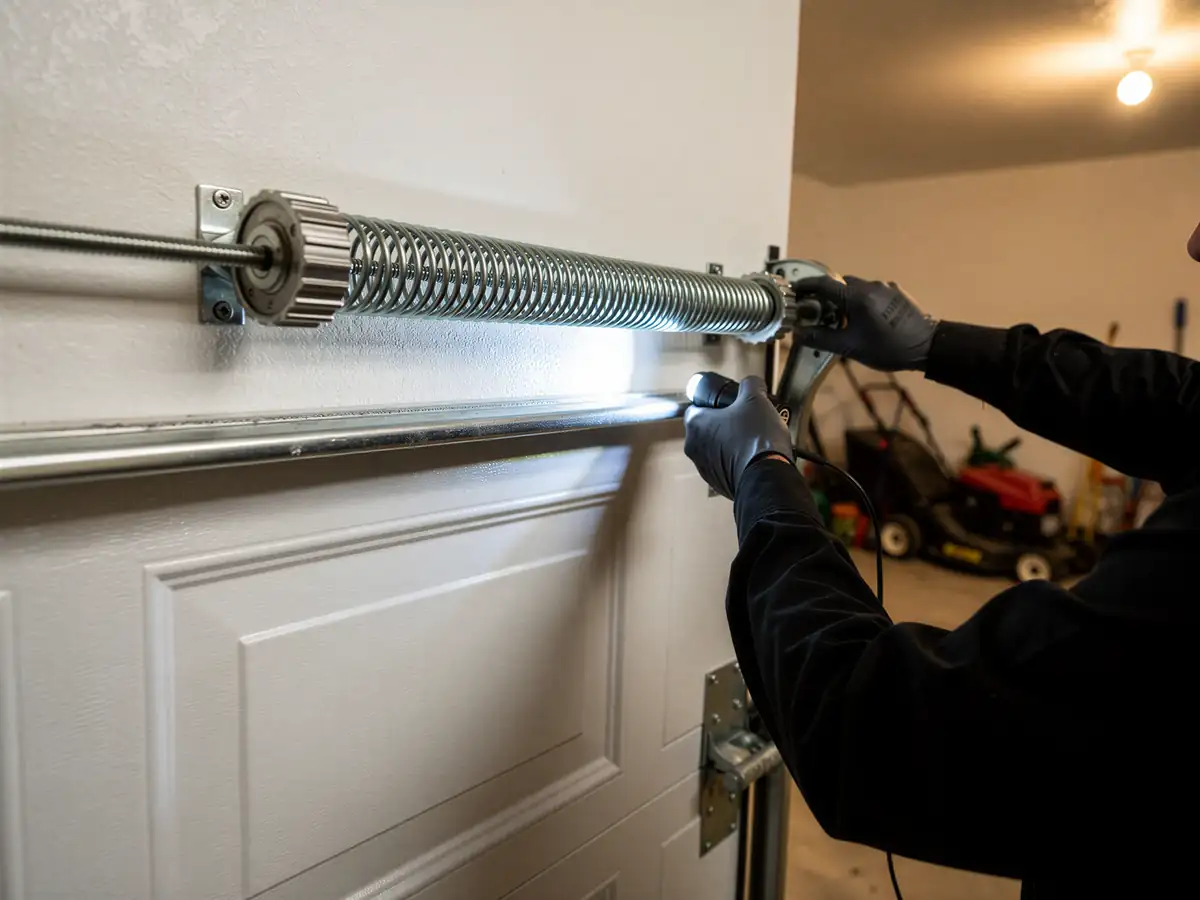
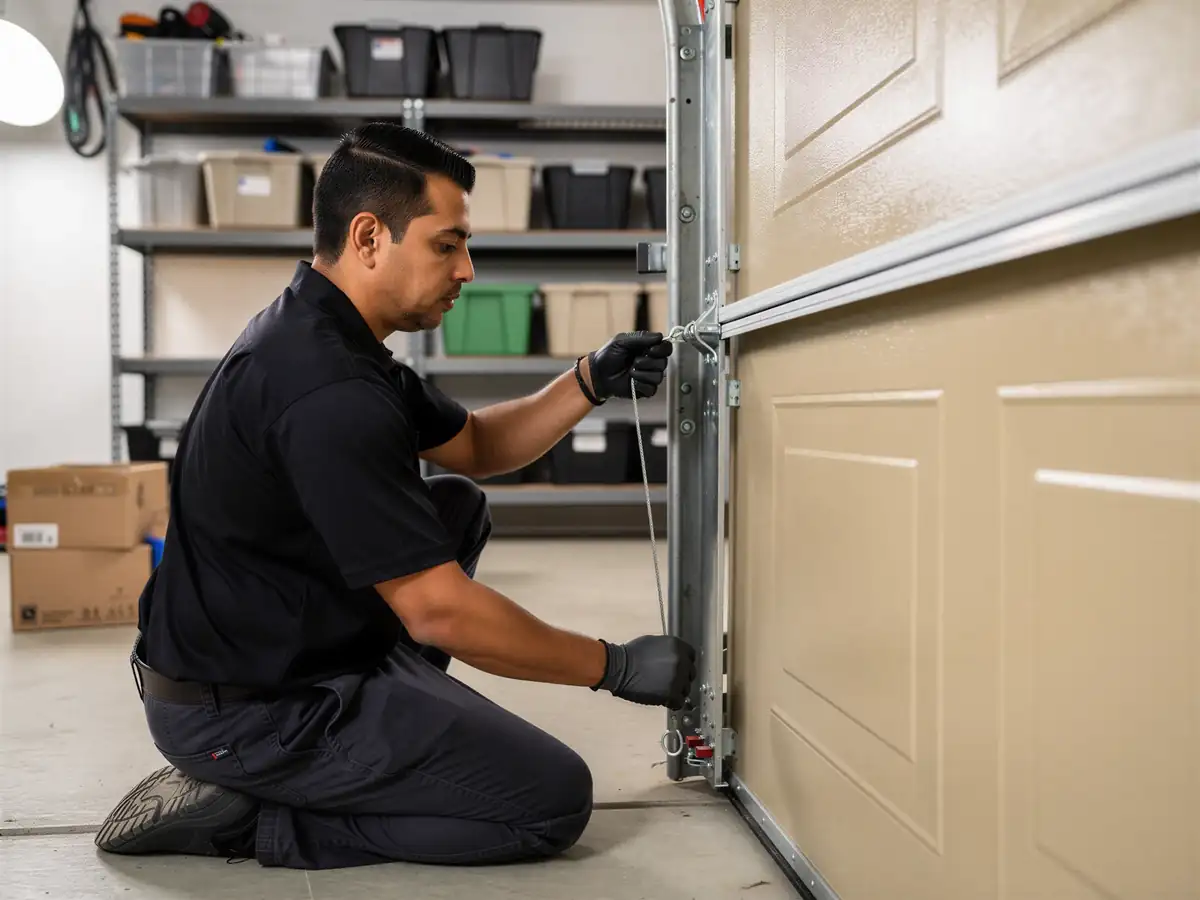
A broken cable on a double door usually means the opposite side is still holding tension, which is the dangerous part - the door can look stable and then drop the second you touch it. We clamp the torsion spring, relieve the drum, and pull the old cable off before anything else happens. On the 1970s and 80s doors common in Lake Lorraine, that often means working with a drum that's been in place since the house was framed, so we check it for wear grooves before running new cable through it rather than assuming it's still round.
Once the new cable's seated and the drum turns true, we re-tension the spring and run the door through a full cycle, watching the cable track in the drum groove instead of walking it by eye for a few seconds and calling it done. If the opener's travel limits were set around the old slack cable, we reset those too - a door that closes an inch short because of cable stretch will eventually start hammering the bottom bracket.
The DIY Question
A torsion spring under tension is not a place to learn on the job
And a cable repair always means working next to one. We're not going to walk you through doing this yourself, because the failure mode - a spring letting go while the cable's off the drum - breaks fingers and worse, not just doors.
What you can check safely before calling
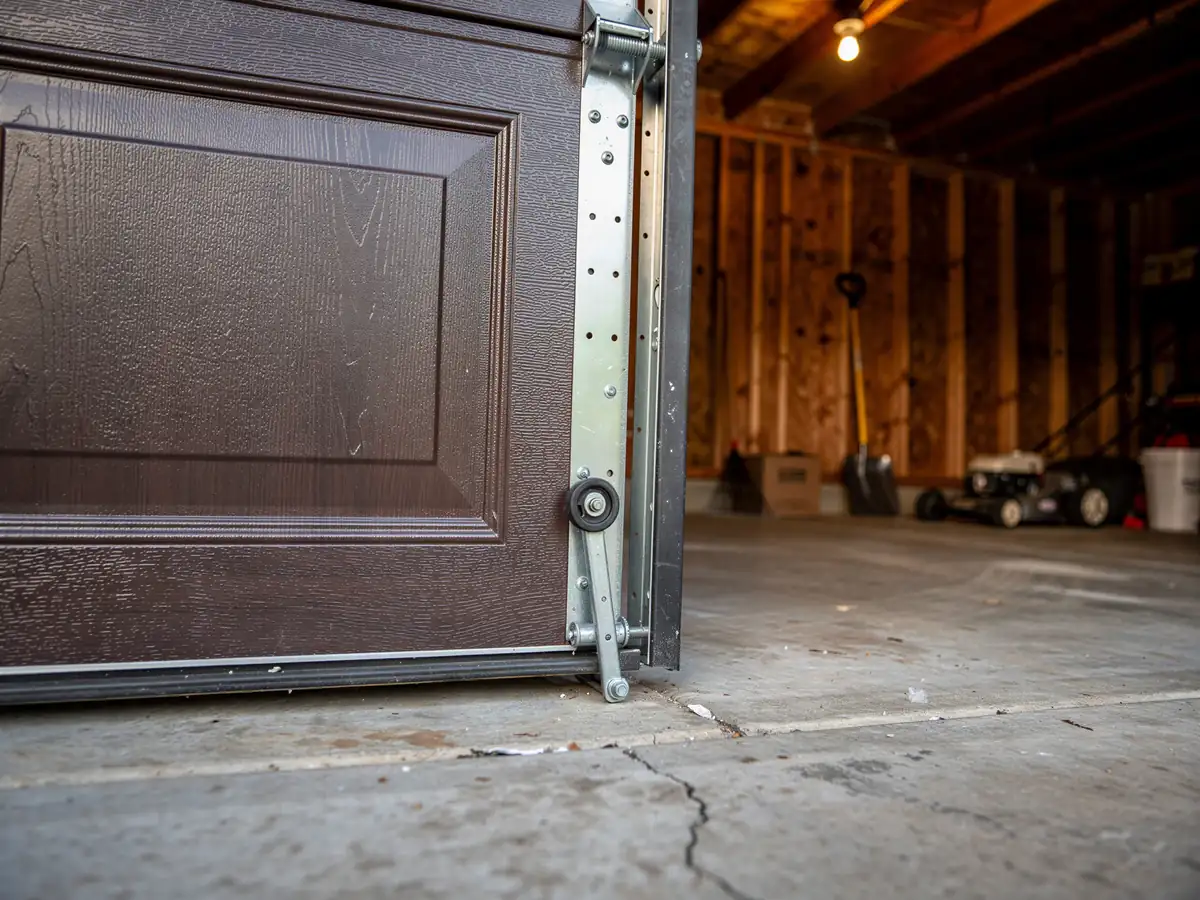
Look at the cable where it wraps the drum at the top corners of the door. If you see individual strands sticking out like a frayed rope rather than a smooth cable, that's told you what's coming, and it's worth getting ahead of it on your schedule instead of at 6am when it finally lets go. Past that, this isn't a YouTube Saturday project, and any shop telling you otherwise is selling you a trip to the ER.