How It Shows Up
Start with the money, because it decides more than people expect
Median household income in this area runs $81,938, and at that level the math on an opener repair tips toward replacement faster than most owners assume. A worn logic board, a stripped gear, or a dying capacitor on a unit already ten or twelve years old often costs close to what a new half-horsepower opener runs installed. Fixing it isn't wrong, but it's not always the better call either.
Valparaiso's housing stock centers on 1975, a few years ahead of the broader area's 1979 median
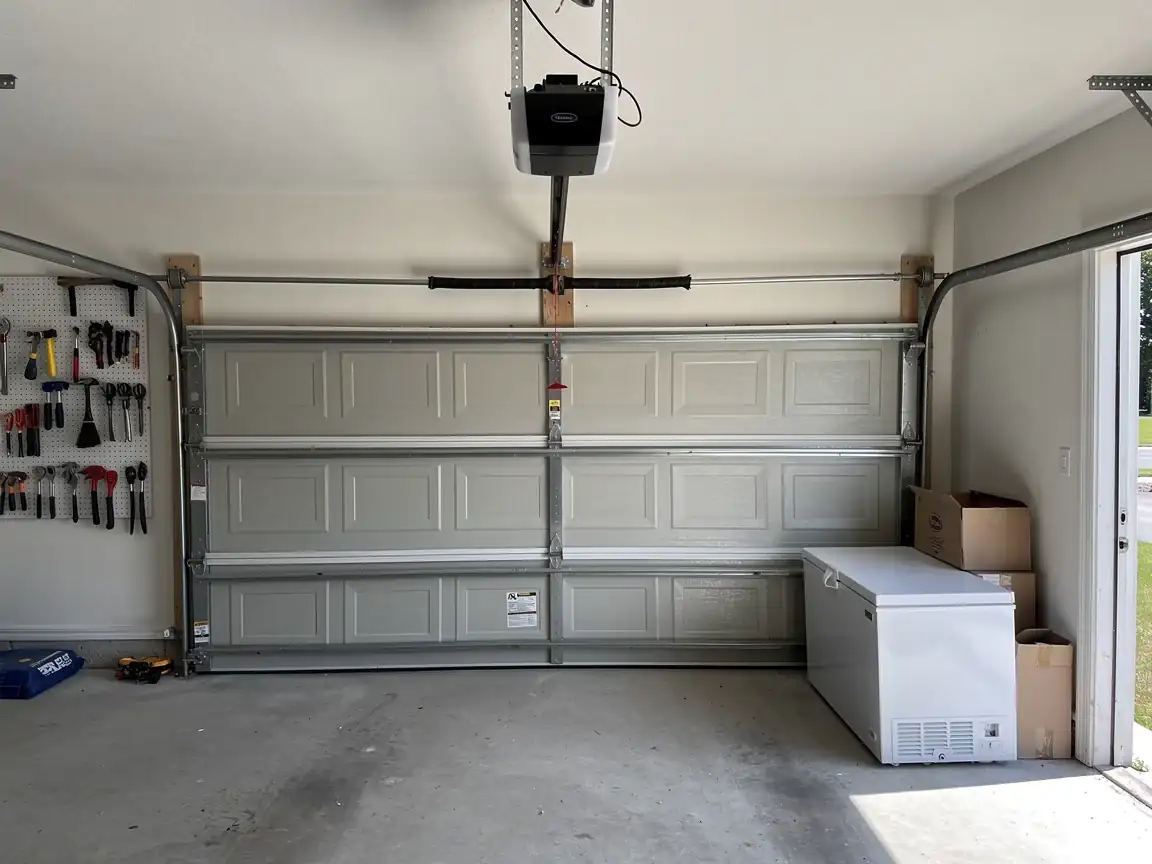
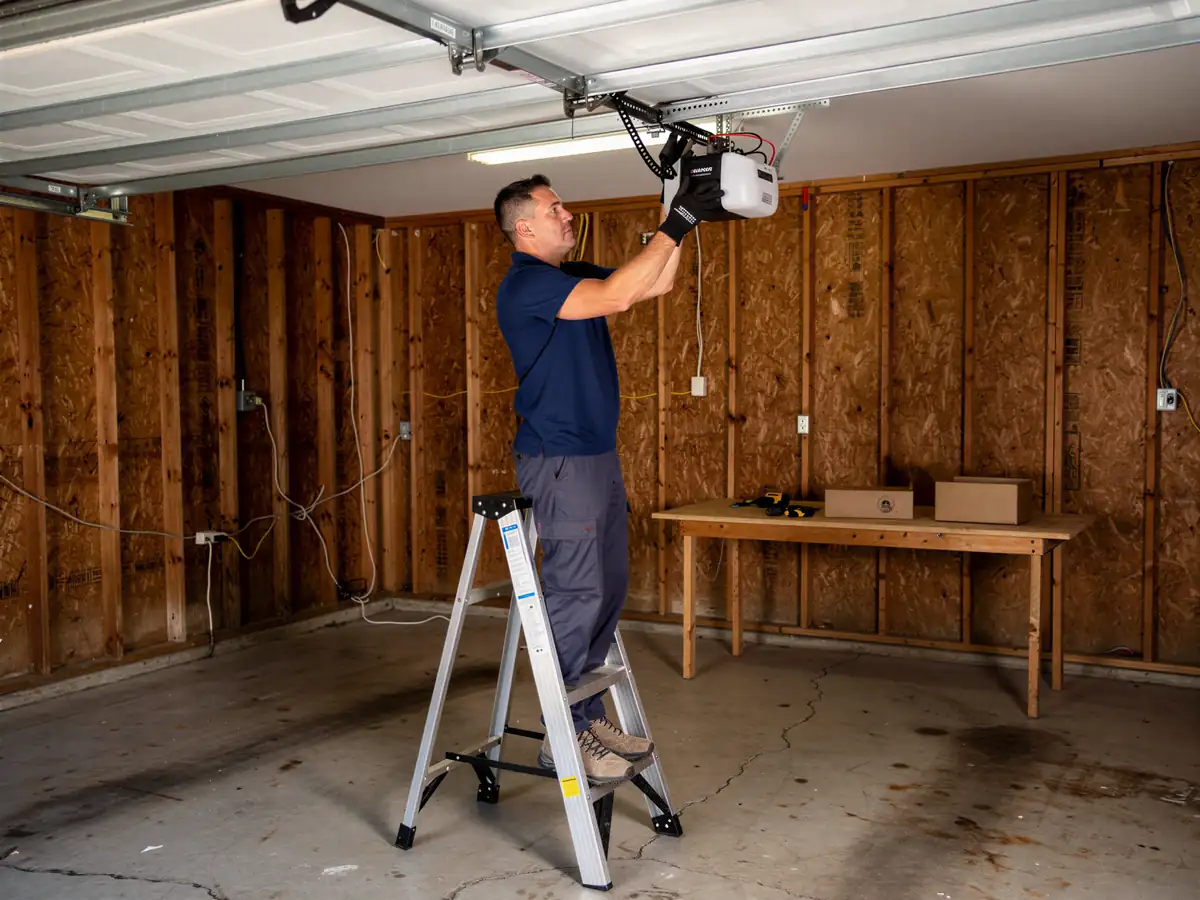
Which puts most garages here on their second or even third opener already. That matters because the symptoms differ from a brand-new install: a door that reverses for no reason, a remote that works intermittently, a motor that hums but doesn't lift. Those point to an aging drive unit or sun-baked circuit board rather than something wrong with the door itself. We see this pattern across the 1960s-70s building wave that covers most of the service area, and Valparaiso sits squarely in it.
We don't guess at which it is over the phone
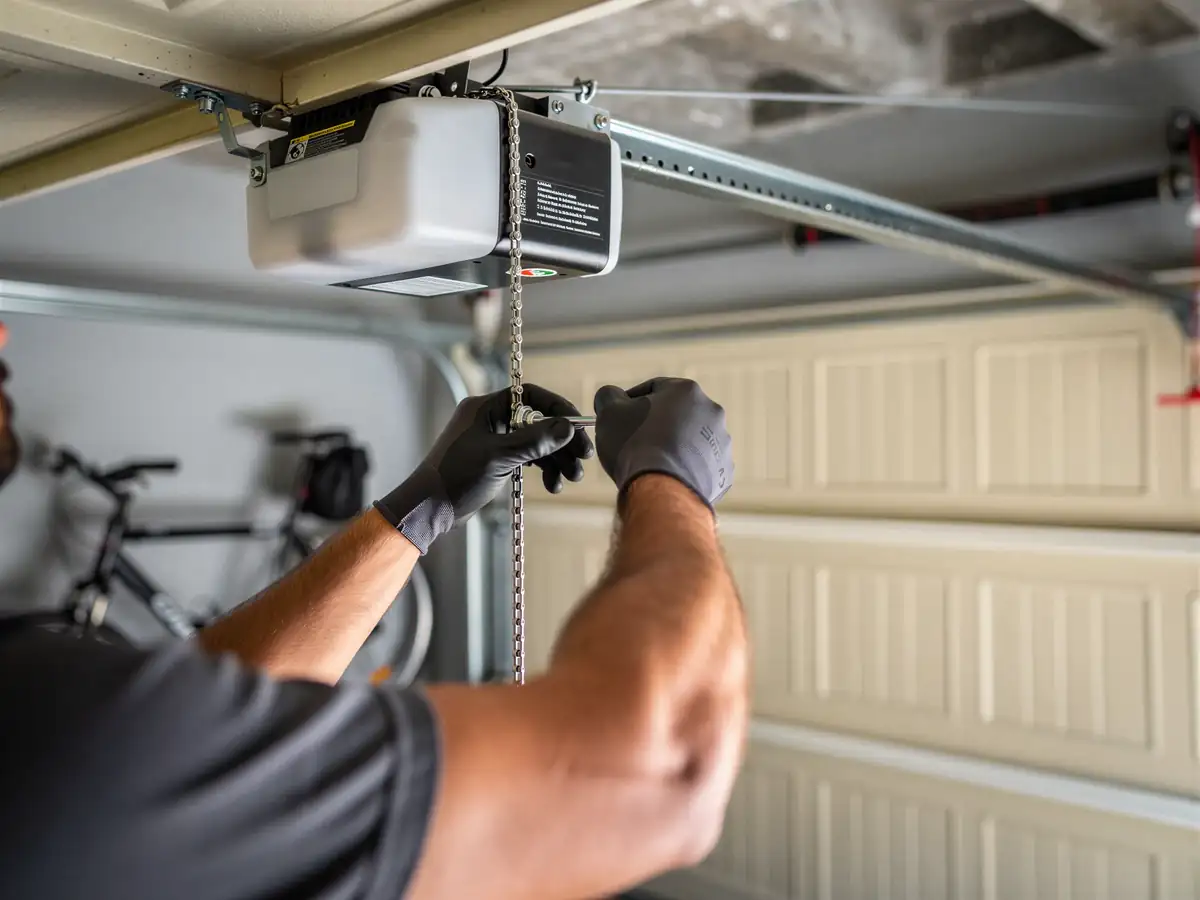
A short look at the unit tells you whether you're buying a part or a new motor head.
See the Valparaiso garage door repair page if the trouble is the door and track
Not the opener itself.
The DIY Question
Swapping a wall button or reprogramming a remote is reasonable DIY work, and plenty of owners here do it themselves. Where it gets risky is the safety sensor wiring. Houses built in the mid-1970s around here often still carry the original header bracket from before photo-eye safety sensors became standard equipment, even when the opener itself has been replaced once or twice since. Retrofitting sensors onto an old bracket means getting the alignment and wiring right, and a door that doesn't reverse properly on contact is a liability, not a convenience feature.
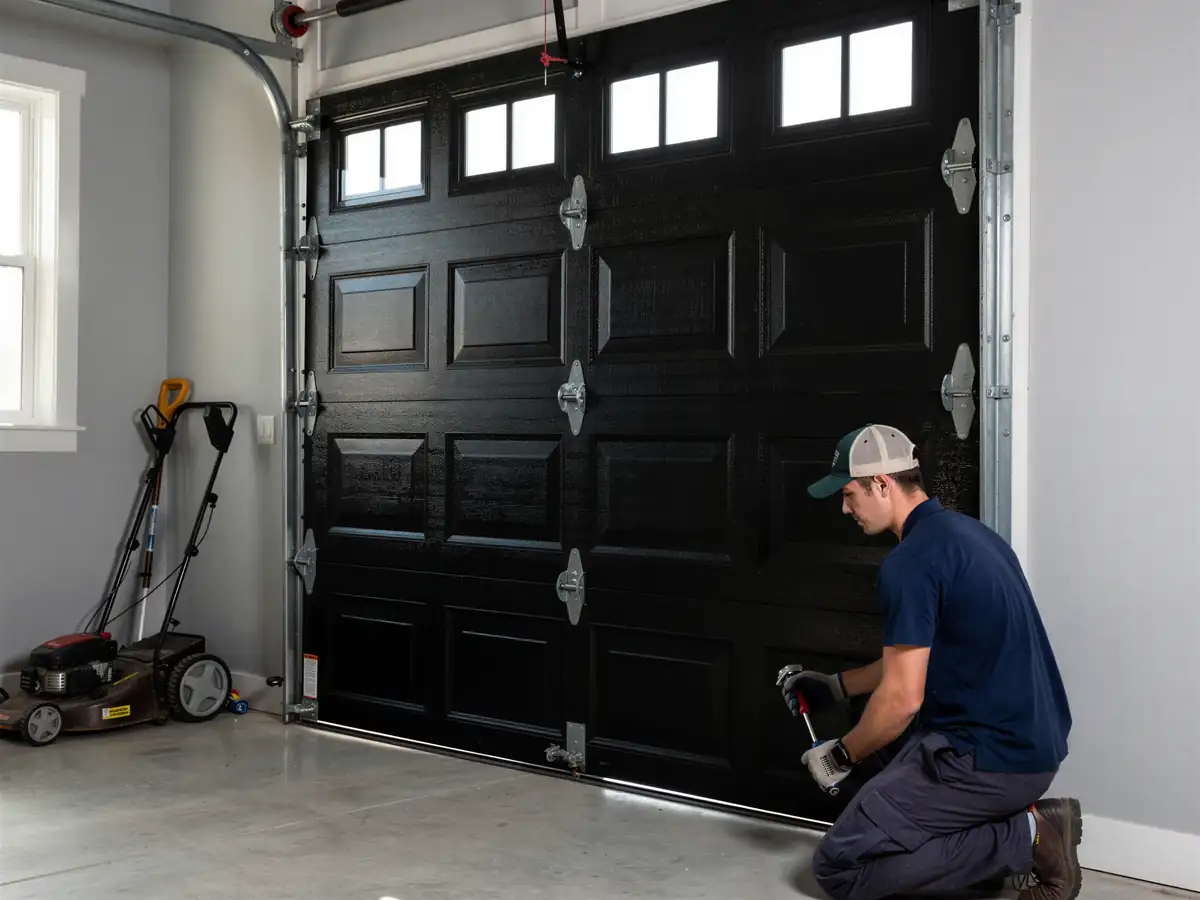
The other common DIY mistake is replacing a motor without checking the travel limits and force settings afterward. A new opener mounted on old hardware can over-tighten the chain or slam the door down harder than it should, especially if the rail or trolley carriage is original to the house.
If the job is a remote, a button, or a battery in the keypad, go ahead. If it involves the sensor eyes, the logic board, or anything behind the motor cover, that's where a wrong guess costs more than the service call would have.
How to Book
Niceville Garage Door Pros covers Valparaiso as a four-mile run from the shop, not a separate branch office here. At four miles, it's the closest stop on the route out of the areas we cover, closer than at five miles or Shalimar at nine. That short drive doesn't buy you a guaranteed same-day slot, but it does mean the trip itself isn't the bottleneck when scheduling a repair.
To book, call and describe what the opener is doing: grinding noise, no response to the remote, reversing mid-close, or just dead. That detail helps us bring the right part instead of guessing from the truck. We don't carry every logic board for every brand on every visit, so a specific description up front can save a second trip.
For a full rundown of what Niceville Garage Door Pros handles opener-wise across the whole service area, including brands and parts stocked, see opener repair in Niceville.
What You Pay
We don't have a posted price list for opener repair
And quoting a number here without seeing the unit would be guessing. What we can tell you is where the line tends to fall: a dead capacitor, a burnt-out circuit board, or a stripped drive gear on a unit that's otherwise sound is usually worth fixing. A motor that's failing mechanically on top of an outdated safety sensor setup usually isn't.
At a median household income of $81,938, most owners in Valparaiso land past the point where a major repair on an old opener costs close to what a new unit runs installed
Warranty included. That's not a rule, just a pattern worth knowing before you commit to a part order on a motor that's already a decade past its expected life.
- $81,938 median household income
One honest limitation
Some older logic boards are no longer made, and if yours is one of them, replacement is the only option regardless of what you'd prefer to spend. We'll tell you straight if that's the case instead of ordering a part that won't arrive.
Why It Happens Here
Valparaiso's 1,761 households sit inside a service area of 14,374, a small enough slice that what we see here tracks closely with the broader 1960s-70s building wave rather than newer construction. That means openers installed decades apart on the same street, original units next to units replaced in the last ten years, with no consistent pattern of age to predict from the outside.
The area's climate runs mild with occasional freezes, which isn't hard on openers the way a true winter climate is. What it does do is work on the electronics over time: humidity swelling a circuit board, dust and moisture fogging a sensor eye. Combined with houses built in the mid-1970s that may still carry original garage wiring behind the motor unit, you get openers that fail from slow electrical wear rather than one dramatic event.
It's a different failure story than you'd get in newer construction, and it's why we ask about the age of the house, not just the opener, when we're trying to figure out what's actually gone wrong.